
AS/NZS 3760:2022 Explained: Workplace Test and Tag Compliance Requirements
February 11, 2026
AS/NZS 3760:2022 sits at the centre of electrical safety in Australian workplaces and remains the primary benchmark that regulators, insurers and safety professionals expect employers to understand. Yet many businesses are unsure what the standard requires in day-to-day operations, particularly when it comes to identifying which items need inspection, how often they must be tested and what to do when equipment fails. For organisations responsible for testing and tagging in Tasmania, understanding how this standard operates in practice is essential to maintaining compliance and managing risk.
Drawing on practical experience supporting Tasmanian workplaces across offices, workshops, construction sites and industrial facilities, ETCS provides insight into how the requirements of AS/NZS 3760:2022 translate into real compliance tasks.
This article presents a clear exploration of the standard from a workplace perspective so readers can see how its requirements convert into responsibilities, schedules and records. It outlines what AS/NZS 3760:2022 requires in terms of inspection, testing and documentation, explains which types of electrical equipment must be tested and tagged in typical Tasmanian workplaces, and clarifies prescribed test intervals and inspection schedules. It also examines tagging, record keeping, failure management, competent persons and accepted test methods. By the end, readers will understand not only what AS/NZS 3760:2022 says but how it can be implemented in a structured, regulator-ready way that reduces risk and supports day-to-day operations.
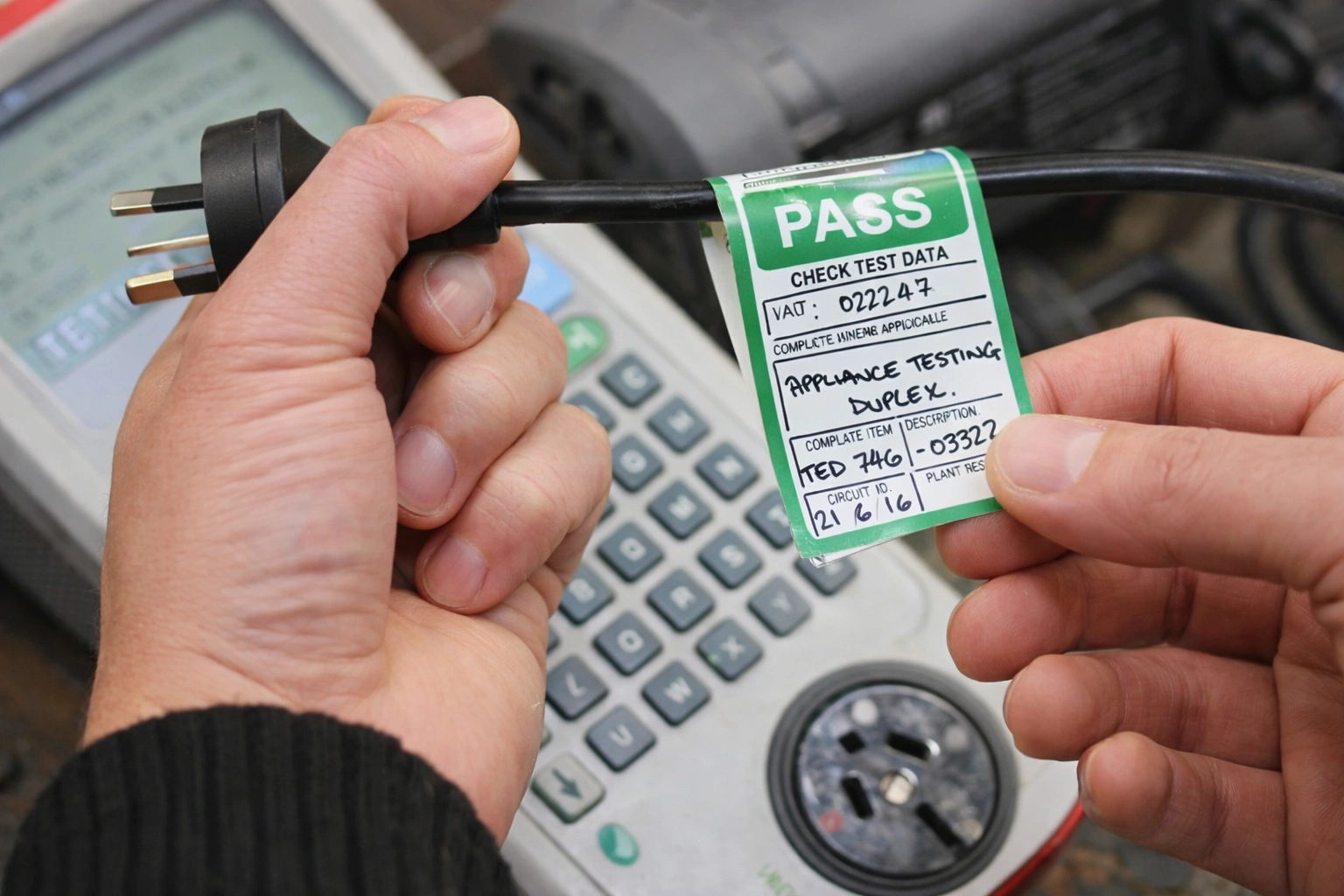
AS/NZS 3760:2022 sets out how workplaces must inspect, test and tag portable electrical equipment and certain RCDs to control the risk of electric shock. It defines what must be tested, how testing is performed, who is permitted to carry it out and how frequently it must occur. For Tasmanian businesses, this is the primary practical standard regulators expect to see followed for electrical equipment in service.
The standard does not simply require a tag to be attached to a lead. It requires a structured process that includes formal visual inspection, electrical testing using appropriate instruments, documented results and clear procedures for managing faulty equipment. Compliance is therefore about maintaining a repeatable system rather than conducting occasional testing events.
AS/NZS 3760:2022 also clarifies that inspection and testing must be risk-based and suited to the environment in which equipment is used. This ensures that higher risk workplaces apply more frequent controls, while lower risk environments maintain proportionate inspection schedules.
AS/NZS 3760:2022 applies to most plug in electrical equipment and flexible cords in workplaces including 240 V and 415 V items. Typical examples are power tools extension leads computers kitchen appliances and portable RCDs. It also applies to some fixed RCDs when they are tested with a portable tester rather than built in self test.
The standard uses a risk based approach. Equipment is grouped by:
Higher risk environments such as construction sites or workshops require more frequent testing than low risk offices.
AS/NZS 3760:2022 requires a visual inspection followed by electrical tests. Both steps are compulsory unless the item is double insulated and the standard allows a specific alternative or the item is brand new and exempted until first use.
A compliant visual inspection includes checking:
Electrical tests are then carried out with a calibrated tester. Depending on the item this typically includes earth continuity insulation resistance polarity and leakage current. For RCDs the standard requires trip time and trip current tests using a suitable RCD tester.
Results must clearly show pass or fail. Any failed item must be immediately withdrawn from service and either repaired by a licensed person then retested or disposed of.
The standard sets maximum test intervals based on the environment in which equipment is used. As a general guide:
Workplaces must select intervals within these limits that reflect the actual level of risk at the site. The environment, likelihood of damage and history of equipment faults all influence how frequently inspection and testing should occur.
Each item that passes inspection and testing must be fitted with a durable, legible tag showing at minimum the test date, the next test due date, the identity of the competent person or organisation performing the test and a clear indication that the item has passed.
The standard also requires that records of testing be retained. These records typically include asset identification, location, test date, test results and details of any repairs or corrective actions. Accurate records are critical for demonstrating compliance in the event of an audit, insurance review or incident investigation.
AS/NZS 3760:2022 applies to most plug-in electrical equipment used in workplaces, not just heavy industrial gear. If it plugs into a socket outlet at 50 V AC to 1000 V AC or 120 V DC to 1500 V DC and is used for work, it will usually need periodic inspection and testing. In Tasmania this covers offices, workshops, construction sites, retail, hospitality, healthcare and home-based businesses.
The standard focuses on items that can be moved, handled or easily damaged in normal use. Fixed hard-wired equipment that a licensed electrician has permanently wired into the building is generally outside the scope of AS/NZS 3760 and is managed through electrical installation regulations instead.
The main group that must be tested and tagged is portable, hand-held and transportable equipment with a flexible cord and plug. Common examples include laptops and desktop computers, monitors, printers, extension leads, power boards, phone and tool chargers, kettles, microwaves, fridges in staff areas, vacuum cleaners, angle grinders, drills, drop saws, welders with a plug, floor polishers and pressure washers with a cord.
Equipment that is moved regularly, is exposed to dust, moisture, vibration or rough handling has a higher risk of insulation breakdown or damage to plugs and cords. AS/NZS 3760 places particular importance on appliances used in construction, manufacturing, workshops and outdoors. In Tasmania this includes tools used by tradies on building sites which are typically supplied from an RCD-protected temporary power board and require more frequent test intervals.
Double insulated appliances that have a two-pin or three-pin plug and the double square symbol are included in the test and tag regime although the specific tests performed differ from Class I earthed equipment. The requirement is still to inspect, test at the specified interval and attach a durable tag.
Extension leads and power boards are among the most common points of failure in workplace electrical systems. Any flexible extension cord, cord set or appliance lead that plugs into a socket outlet must be inspected and tested. This includes heavy-duty outdoor leads, extension reels and detachable IEC leads used for computers and monitors.
Power boards and plug-in adaptors used in offices, workshops and retail areas are also within the scope of AS/NZS 3760:2022. The standard requires a thorough visual inspection for overloading, physical damage, cracked casings and signs of heat discolouration, followed by appropriate electrical tests. Daisy-chained boards or units showing evidence of overheating or impact damage are common sources of non-compliance in many Tasmanian workplaces.
Portable plug-in RCDs used on construction sites, in workshops or with outdoor equipment must be tested and tagged in accordance with AS/NZS 3760:2022 and, where construction work is involved, the additional requirements of AS/NZS 3012. Fixed RCDs installed within switchboards are not covered under test and tag requirements and instead fall under electrical installation inspection and maintenance obligations.
Equipment that is permanently hard wired into the electrical installation such as ducted air conditioning units, fixed ovens, wired-in water heaters and built-in commercial kitchen equipment is outside the normal scope of AS/NZS 3760. These items still require maintenance but through different electrical safety obligations.
Extra-low voltage equipment below 50 V AC or 120 V DC such as many USB powered devices is typically not subject to test and tag unless the power supply itself is a mains plug-in unit in which case the power pack must be tested. Battery powered tools without a mains connection are not tested, although their plug-in chargers are treated as in-scope equipment.
AS/NZS 3760:2022 sets specific inspection and test intervals based on the environment in which equipment is used and the likelihood of damage, not simply the type of appliance. For Tasmanian workplaces this means different areas within the same site may require different schedules. Applying a single blanket interval across all equipment often results in either over-testing low-risk items or under-testing higher-risk equipment, both of which can create compliance issues.
The standard also separates formal visual inspections from electrical testing. In many cases equipment must undergo visual checks more frequently than it is electrically tested. Understanding this structure is essential for developing a practical inspection schedule that maintains safety while meeting regulatory expectations.
While exact intervals must comply with AS/NZS 3760:2022, the overall structure is consistent: higher-risk environments require more frequent testing. Common intervals encountered in Tasmanian workplaces include:
Portable RCDs and fixed RCDs are subject to separate push-button and trip-time test requirements, which are typically more frequent than standard appliance test intervals. These RCD checks must be incorporated into the workplace’s overall inspection schedule to ensure ongoing compliance.
Importantly, test intervals run from the date of the last compliant test, not from purchase or installation. For example, if a drill on a Hobart construction site was last tested in January, it must be retested by April to remain in service under a 3-month interval.
AS/NZS 3760:2022 treats visual inspection as a formal and mandatory component of the testing regime. Every test event must include a thorough visual examination for damage such as cuts to flexible cords, cracked plugs, loose components or signs of overheating.
In many workplaces, internal procedures also require informal visual checks before use. For example, a maintenance team may be instructed to inspect each extension lead for cuts or exposed conductors at the start of every shift, even though the formal electrical test is only required every six months. Documenting these routine checks alongside formal testing helps demonstrate that electrical safety controls are active between scheduled test intervals and align with WorkSafe Tasmania expectations.
Electrical testing then confirms the integrity of the equipment. Common tests include earth continuity, insulation resistance and polarity where applicable. The standard permits a reduced test scope for some double insulated equipment, although the visual inspection requirement applies at every formal test event regardless of equipment class.
AS/NZS 3760:2022 allows duty holders to adjust test intervals where there is clear evidence of lower or higher risk. This flexibility recognises that workplaces are not uniform and that equipment in different areas may be exposed to very different levels of mechanical stress, moisture, dust or movement.
In practice, building a compliant schedule involves:
For a Tasmanian workplace this may result in 3-monthly testing for tools used in a wet workshop, 6-monthly testing for warehouse extension leads and 12-monthly testing for office computers. These variations should be formally documented in a compliance schedule that can be produced during regulator inspections, audits or incident investigations.
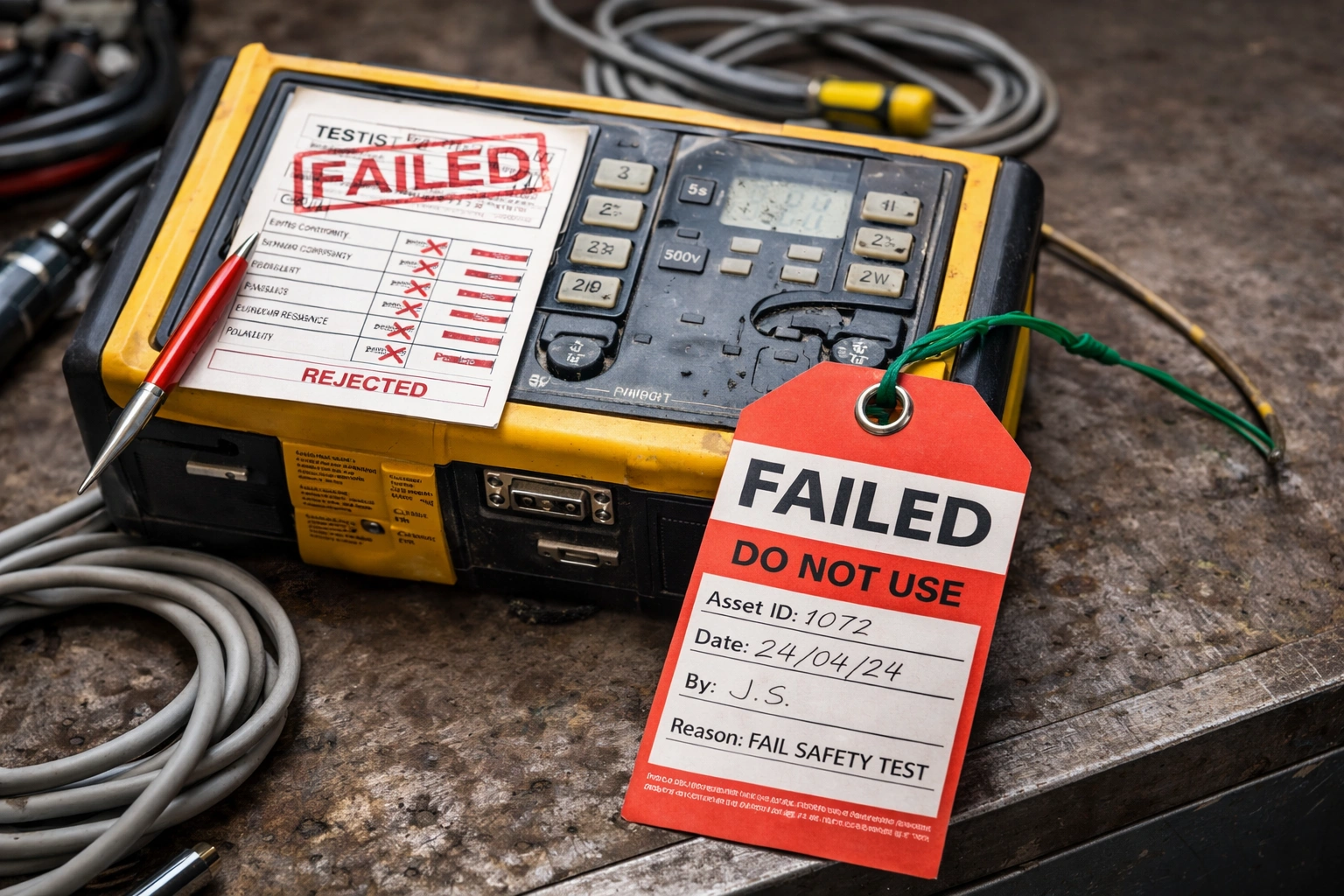
This part of AS/NZS 3760:2022 sets out how appliances must be tagged, how records are kept and what must occur when an item fails testing. For Tasmanian workplaces, getting this right is essential to demonstrate compliance during audits, insurance reviews or incident investigations.
The standard is specific about what information must appear on tags and in records. It also requires clear action on failed equipment so unsafe items cannot inadvertently return to service.
Every item that passes inspection and testing must be fitted with a durable and legible tag. While AS/NZS 3760:2022 does not prescribe a single tag layout, it requires that certain information be clearly displayed and that the tag is securely attached.
A compliant tag will typically include:
Colour coding may be used to assist with quick visual identification of test cycles, although colour systems are a management choice rather than a strict requirement of the standard. In harsher environments, tags must be robust enough to withstand moisture, cleaning chemicals and abrasion for the duration of the test interval.
Tags should be positioned where they are visible during normal use, such as near the plug of a lead or on the body of a tool, rather than hidden inside covers or inaccessible locations.
AS/NZS 3760:2022 requires workplaces to maintain traceable records of testing rather than relying solely on physical tags. Records may be electronic or paper-based, provided they are secure, organised and readily retrievable.
For each item, records should include:
Records should be retained for the life of the equipment or in accordance with the organisation’s safety management and insurance requirements. In Tasmania, WorkSafe or investigators may request historical records following an incident, making a structured and up-to-date register essential.
If an item fails any part of the visual inspection or electrical testing process, AS/NZS 3760:2022 requires it to be immediately withdrawn from service. Simply applying a fail tag while leaving the item accessible is not sufficient.
A compliant response typically includes:
Failed items must either be repaired by a competent person and then fully retested and retagged, or permanently disposed of so they cannot re-enter service. Maintaining this documented chain of action is a critical part of demonstrating compliance with AS/NZS 3760:2022.
This section explains who is permitted to carry out inspection and testing under AS/NZS 3760:2022 and what methods must be used. For Tasmanian workplaces, this distinction is important, as WorkSafe Tasmania expects electrical equipment to be inspected and tested by individuals with appropriate training and competency, using suitable and calibrated instruments.
Under the standard, a “competent person” may perform inspection and testing provided they have the necessary practical and theoretical knowledge to understand how equipment is constructed, how faults occur and how to apply the prescribed test procedures correctly. In some circumstances, particularly where equipment is complex or involves higher-risk electrical work, a licensed electrician may be required under Tasmanian legislation.
The test methods themselves must follow the requirements set out in AS/NZS 3760:2022, including appropriate sequences for visual inspection, earth continuity, insulation resistance, polarity and RCD testing as applicable. Instruments used for testing must be suitable for the task and maintained in a calibrated condition to ensure accurate results.
AS/NZS 3760:2022 defines a competent person as someone who has the necessary practical and theoretical skills to carry out inspection and testing of electrical equipment. This does not automatically require a licensed electrician, although Tasmanian legislation may require a licence for certain higher-risk tasks or repair work.
In practice, a competent person must:
The standard expects this knowledge to be supported by appropriate training and experience. In many workplaces this is demonstrated through completion of a recognised test and tag training course combined with supervised practical experience. Records of training and demonstrated competency should be retained by the business for audit, regulatory and insurance purposes.
Where equipment is complex, forms part of a fixed installation or involves three-phase supplies, a licensed electrician may be required under Tasmanian electrical legislation to carry out certain tasks or repairs.
AS/NZS 3760:2022 requires a competent person to visually inspect equipment before any electrical tests are applied. This step is not optional because many hazards can be seen but not detected by an instrument.
The inspection must cover the supply cord, plug, strain relief, casing, switches and guards. The tester checks for cuts, exposed conductors, burn marks, loose parts, missing covers, incorrect fuses or signs of liquid ingress. If any serious defect is found the item fails immediately and must be removed from service rather than tested further.
The inspection also confirms that the item is suitable for the environment. For example in a Tasmanian workshop with moisture or conductive dust a standard domestic power board may be unsuitable even if it passes electrical testing.
After the visual inspection, the competent person applies specific electrical tests. The exact combination depends on whether the item is Class I (earthed), Class II (double insulated), a flexible cord set, an RCD or a portable outlet device.
Common test methods include:
RCDs require trip time and trip current testing using an appropriate RCD tester. Portable appliance testers and related instruments must be suitable for the intended purpose and maintained in a calibrated condition, typically with calibration verified at 12-month intervals and supported by retained calibration records.
Testing must be performed using equipment configured to the limits specified in AS/NZS 3760:2022, with test sequences matched to the equipment class and environment. Applying the correct methods is essential to ensure results are valid and defensible in the event of an audit or investigation.
In practice, AS/NZS 3760:2022 is about building a simple, repeatable system for checking electrical equipment before faults occur. Most Tasmanian workplaces already have the necessary equipment in place; what is often required is clearer allocation of responsibilities, structured scheduling and consistent record management rather than major new infrastructure.
Effective implementation means treating the standard as an ongoing safety process rather than a one-off testing event. This involves clearly identifying which items must be tested, determining appropriate intervals based on risk and maintaining records that can withstand scrutiny during a WorkSafe Tasmania inspection.
The first step is to compile a register of all portable or transportable electrical equipment and residual current devices used in the workplace. This typically includes power tools, extension leads, portable appliances, IT equipment, floor cleaning machines and temporary power boards. Fixed wired equipment is generally outside the scope unless it is supplied by a flexible cord and plug.
Test intervals are determined by environment and usage rather than by industry type alone. For example, in Tasmania:
Each area of the site should be assessed individually so intervals reflect actual exposure to damage and risk.
Once equipment and frequencies are identified, a workable schedule must be developed. Testing can be grouped by location or department and aligned with operational cycles such as scheduled shutdowns or low-activity periods to minimise disruption.
A compliant program typically includes:
Each test event should incorporate both visual inspection and the required electrical tests such as insulation resistance, earth continuity, polarity and RCD trip-time testing where applicable. Any failed item must be immediately withdrawn from service and managed in accordance with documented procedures.
AS/NZS 3760:2022 requires that testing records be accurate, traceable and available upon request. Maintaining a structured register that records asset identification, location, test date, results, next due date and corrective actions enables organisations to demonstrate compliance quickly during audits or investigations.
For Tasmanian workplaces, the test and tag system should integrate with broader Work Health and Safety procedures, including inductions, toolbox talks and contractor management. New equipment should be added to the register upon arrival, and contractors should be required to present compliant tags on their own electrical equipment before commencing work on site.
AS/NZS 3760:2022 provides a structured and practical framework for managing electrical safety in workplaces. When properly understood and consistently applied, it clarifies which equipment must be inspected and tested, how frequently testing must occur and what documentation is required to demonstrate compliance.
The standard reinforces that tagging alone is not sufficient. Effective compliance requires systematic visual inspection, appropriate electrical testing, accurate record keeping and clear procedures for managing failed equipment so unsafe items are removed from service without delay.
It also makes clear that competency and correct test methods are fundamental controls, not administrative formalities. Inspection and testing must be performed by appropriately trained individuals using suitable, calibrated instruments to ensure results are valid and defensible.
When embedded into inductions, maintenance planning, contractor management and internal audits, AS/NZS 3760:2022 becomes part of routine operational practice rather than a periodic compliance task. Applied in this way, the standard supports both regulatory obligations and the ongoing reduction of electrical risk in Tasmanian workplaces.

.svg)
.svg)


