
Can I Use A Cable Reel While It Is Still Wound Up?
October 22, 2026
A portable cable reel can overheat even when it has a current test tag. In a Canberra workshop or manufacturing facility, safe operation depends on more than the latest testing result. The reel must be used according to its manufacturer's instructions, with the cable deployed as required and the connected equipment kept within the applicable load rating.
Whether a reel can remain wound during use depends on its specific markings, instructions and operating conditions. This article explains why coiled cable retains heat, how connected equipment affects the total load, what wound and unwound ratings mean and why a test tag does not guarantee safe operation under every condition.
A cable reel heats up because its conductors have electrical resistance. As current flows through them, some electrical energy becomes heat. Higher current increases resistive heating, making the electrical demand of connected equipment a vital factor in the reel's operating temperature.
Coiling the cable restricts how effectively that heat can escape. Combined with sustained electrical demand, poor ventilation or high ambient temperatures, this can cause heat to accumulate even when the cable has no obvious visible damage.
When cable is tightly wound, neighbouring layers restrict heat loss. Cable inside the reel has less exposure to circulating air than cable deployed according to the manufacturer's instructions. Heat can therefore accumulate within the coil, even if the exposed outer cable does not initially appear damaged.
The risk depends on the reel's design, cable construction, ventilation and operating conditions. A reel's size or appearance alone cannot establish whether it can safely handle a particular load.
Duration also matters. An arrangement that appears uneventful during brief use may become dangerously hot during sustained operation. Restricted airflow and elevated ambient temperatures can further reduce cooling, so an initial period without visible trouble does not establish that the setup is suitable for an entire shift.
A cable reel supplies the combined electrical demand of all connected equipment operating at the same time. Multiple outlets do not provide separate allowances beyond the reel's overall rating, so each appliance's contribution must be considered alongside the others.
Safe Work Australia provides guidance on preventing electrical overloads, including providing sufficient socket outlets and using appropriately rated circuit protection.
In a workshop, a reel might supply different portable tools or appliances as tasks change throughout the day. The relevant question is whether the combined demand remains within the applicable rating for the reel's actual operating configuration.
Some equipment also draws additional current during startup. Where the intended demand or suitability of the arrangement is unclear, a professional should assess the setup rather than relying on the number of plugs connected or the ratings of individual appliances alone.
Routine inspection and electrical testing assess equipment condition within the scope of the service. They do not necessarily reproduce the heat generated by a particular workload over an extended period. The distinction is explained further in visual inspection vs electrical testing.
Some cable reels have separate ratings for use while wound and when fully unwound. These ratings apply to different operating conditions and should not be treated as interchangeable.
For workplace extension lead safety, the reel's stated limits must be considered alongside the connected equipment, the manufacturer's instructions and the environment in which the reel operates.
A wound rating accounts for the reel operating with the cable coiled on the drum. A fully unwound rating applies under the specified unwound conditions, when the cable can release heat more effectively. Where both ratings are provided, the wound rating is commonly lower, but the difference varies by product.
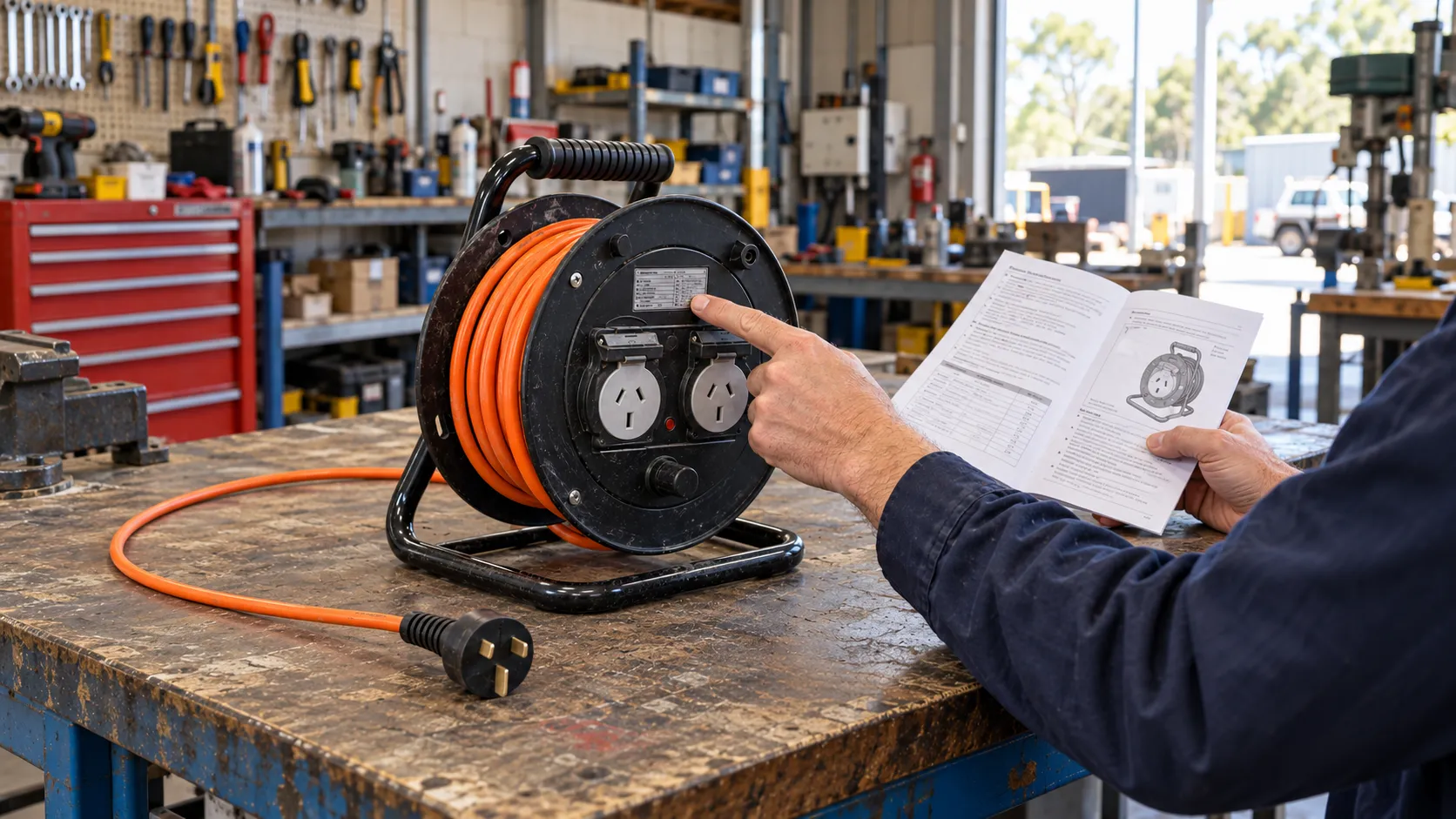
Check the markings and manufacturer’s instructions to confirm the permitted load, cable deployment requirements and any environmental restrictions. Do not assume that a prominent maximum rating applies regardless of how the reel is used.
Partially unwinding the cable does not automatically make the fully unwound rating applicable. Unless the manufacturer explicitly permits an arrangement, do not estimate an allowable load based on how much cable remains on the drum. Trapped cable may still retain heat and a visual estimate cannot establish its safe operating capacity.
When purchasing or assessing equipment, confirm that the ratings are legible and the operating instructions are available. If the markings are missing, damaged or unclear, seek qualified advice rather than adopting a limit from a similar-looking reel.
Fully unwinding a reel as instructed can improve heat dissipation, but it does not increase capacity beyond the applicable rating. The combined electrical demand, cable condition, outlet condition and surrounding environment must still be suitable.
A damaged cable does not become safe simply because it has been unwound. Moisture, contamination, mechanical damage and exposure to workshop traffic can also create hazards that cable deployment alone will not resolve.
Facilities managers should explain the intended application when arranging an equipment assessment. Information about the connected appliances, duration of use, cable deployment and operating environment helps establish whether further evaluation is necessary.
The broader principles of electrical testing and tagging in workplaces can help distinguish equipment inspection from decisions about how it should be used. Workplace procedures should also ensure that relevant instructions and operating restrictions remain accessible to staff.
A current test tag records a testing outcome, but it does not guarantee that a cable reel is safe under every operating condition. A reel can pass the applicable checks and later become unsuitable because of excessive loading, physical damage or use outside the manufacturer's instructions.
The tag should therefore be considered alongside the reel's markings, instructions, physical condition and intended application. Each provides different information about equipment safety.
Depending on the equipment and service scope, electrical testing may include visual inspection and relevant electrical measurements. A satisfactory result indicates the outcome of the applicable assessment at that time; it does not establish that every possible combination of connected appliances is acceptable.
For example, a current test tag does not make a wound reel suitable for a load above its wound rating. Nor does it prevent damage caused after testing, such as crushing, abrasion or overheating during operation. A tag may remain attached and readable even when the equipment needs to be removed from service.
The distinction between a test record and ongoing equipment suitability is explored further in what a safety tag tells you about equipment safety.
Businesses comparing testing and tagging in Canberra services should explain the intended application, including the reel's expected load, deployment and operating environment. Ask what the proposed assessment covers and whether any concerns require further investigation. This provides a clearer picture of equipment suitability than relying on the presence of a current tag alone.
Discolouration, a burning smell, softened or distorted components and a thermal cut-out that repeatedly operates are warning signs that require attention. Repeated cut-out operation should not be treated as a routine inconvenience or as proof that the reel will always protect itself before damage occurs.
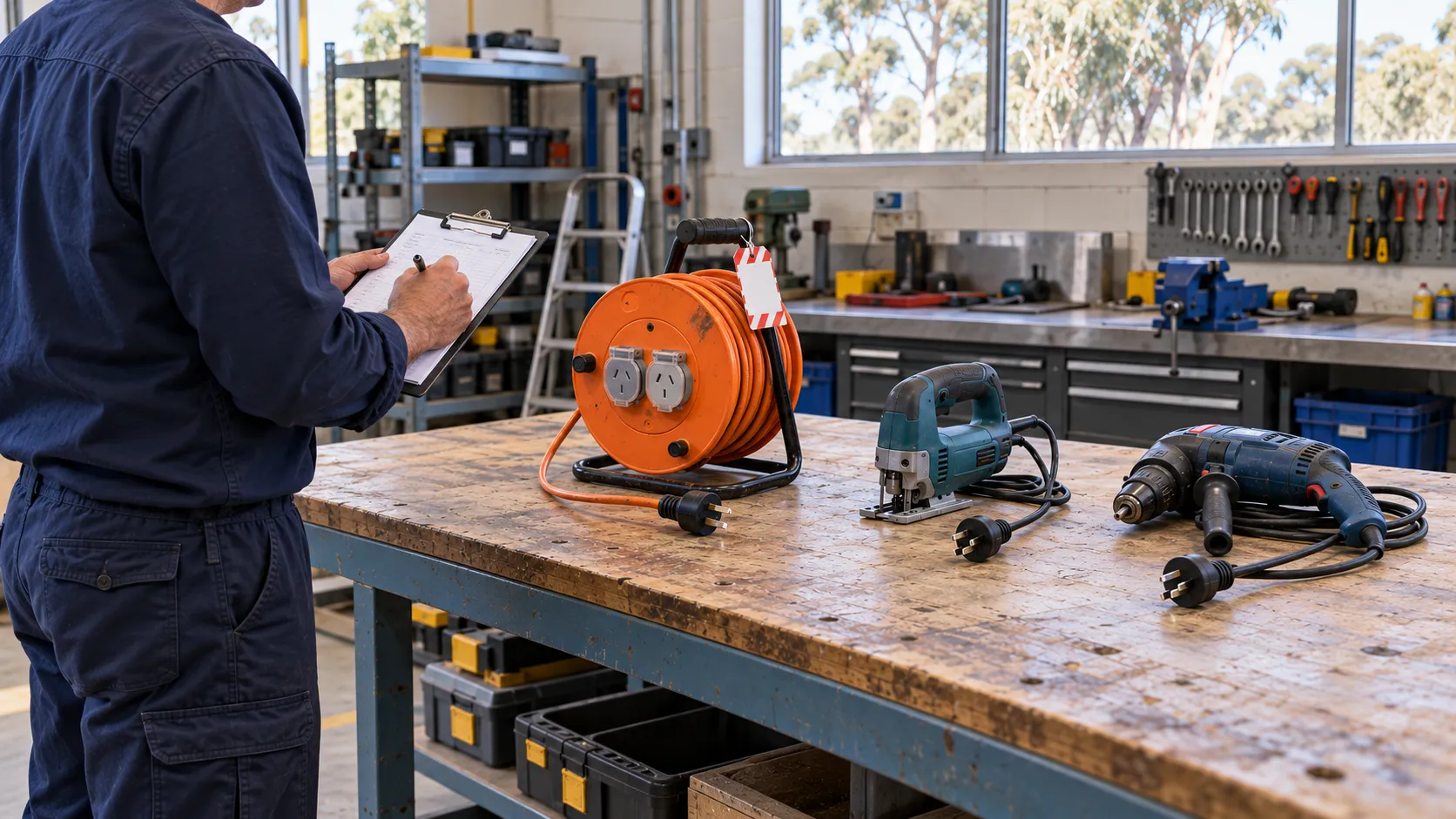
Stop using the equipment and follow workplace isolation and out-of-service procedures. Prevent it from being returned to service until the concern has been assessed and any necessary action completed. Do not repeatedly reset a protective device and continue working, or assume that allowing the reel to cool restores it to a safe condition.
A testing professional should assess the equipment and determine what further action is needed. Electrical repairs and concerns involving the fixed electrical supply should be referred to an electrician.
When reporting an overheating incident, record what was connected, whether the cable was wound or unwound, how long the equipment had been operating and any warning signs observed. This information helps the professional investigate the circumstances without requiring staff to dismantle the reel or attempt electrical testing themselves.
A current test tag is an important part of workplace electrical safety, but it does not replace the manufacturer's instructions or confirm that every operating arrangement is suitable. Cable reels must be used within their applicable wound or unwound ratings, with the combined demand of connected equipment and the surrounding conditions taken into account.
Regular equipment checks, clear out-of-service procedures and staff awareness can help identify problems before they lead to equipment damage or injury. Any reel showing signs of overheating or physical damage should remain out of service until it has been assessed.
ETCS help understand workplace testing and tagging requirements and identify what an assessment covers. By combining testing with correct cable reel use and prompt attention to warning signs, workplaces can decide about equipment safety.


