
Does My Equipment's Test Tag Cover Its Detachable Power Lead?
October 22, 2026
A printer moves to another desk, a counter display gets relocated or a missing power lead is replaced with one from a cupboard. The equipment still has its test tag, but does that tag confirm that the lead now supplying it was also assessed? Not necessarily. When detachable leads move between devices, their testing history and suitability can become difficult to verify.
For businesses in Tasmania, distinguishing an appliance's testing history from the condition and compatibility of its removable lead is important for electrical safety. ETCS can help clarify testing requirements and identify the appropriate next steps. Knowing what was assessed, which item the result applies to and what needs further checking can help businesses manage electrical equipment more confidently.
Start by checking which items the testing provider assessed rather than relying solely on the location of a test tag. A detachable mains lead can be disconnected from one appliance and used with another, so the identification and records associated with the assessment matter.
The question is whether the available information establishes the testing history of the specific lead and confirms that it is suitable for the equipment it will supply.
A permanently attached cord remains connected to its appliance during normal use. A detachable mains lead can be unplugged and moved between devices. Desktop computers, monitors and printers are common examples of workplace equipment that may use removable leads.
This creates an identification issue when equipment is moved or replacement leads are taken from shared storage. The appliance may have been tested, but its current lead could have come from another workstation or an unidentified collection of spares.
A tag on the appliance does not automatically establish whether its detachable lead was included in the assessment. Equally, the absence of a separate tag on the lead does not, by itself, prove that it was excluded. The tagging arrangement and testing records need to be considered together.
Ask the testing provider how individual items are identified and how the scope of each assessment is recorded. The aim is to establish which items were assessed and whether the available information can be matched to the equipment currently in use.
Contact the original testing provider with the identifying details available for the appliance and its lead. Explain whether the lead has remained with the device or may have been swapped. Ask whether the assessment included the detachable lead and how that item was recorded.
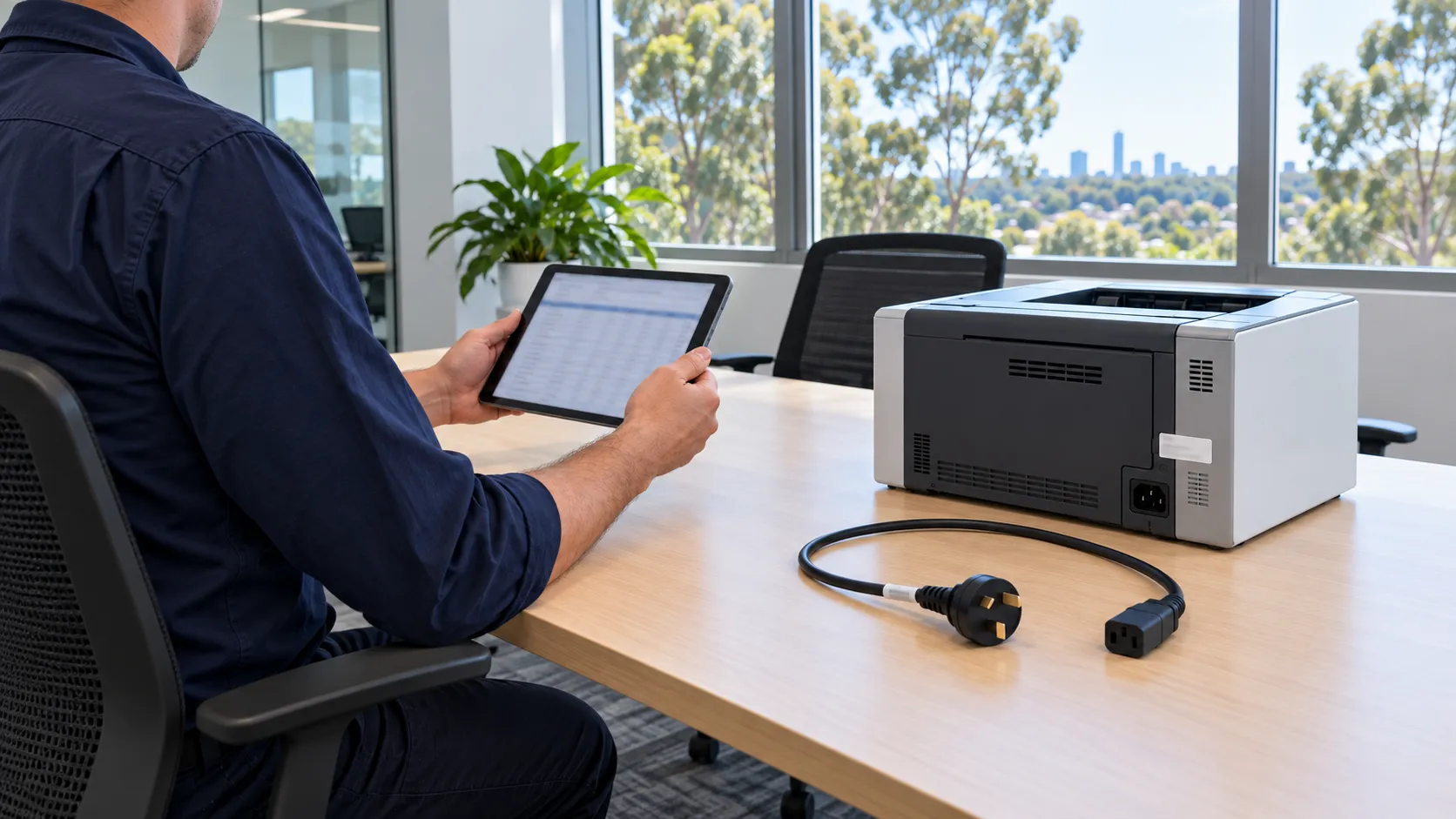
For example, confirmation that a printer was tested does not establish the testing history of an unidentified lead taken from a storage cupboard several months later. If the provider cannot establish the lead's identity from the available records, its status remains unresolved until the necessary checks have been completed.
The guide to electrical testing and tagging in workplaces provides further context about workplace testing. For a detachable lead, the enquiry should focus on the specific item, its recorded assessment and any information needed to confirm its suitability.
WorkSafe Tasmania’s guidance on workplace electrical safety provides further information about managing electrical risks and keeping equipment safe and regularly checked.
Moving a lead between devices changes the electrical connection being used. The swap does not automatically mean the equipment is unsafe, but the original appliance's test tag cannot establish the condition or testing history of a different lead.
Two separate checks are important: whether the lead's electrical condition has been assessed and whether it is appropriate for the intended equipment. Passing one check does not automatically satisfy the other.
In busy workplaces, staff may borrow leads between service counters, office desks and shared equipment. A replacement might come from an unused printer or a cupboard containing spare cables. Although the appliance retains its original tag, the lead now connected to it may have a different history.
The original assessment cannot establish the condition of a replacement lead that was not included in it. A similar appearance does not prove that two leads have experienced the same handling or have the same electrical condition. One may have remained protected behind a desk, while another has been repeatedly moved, trapped or pulled.
The appropriate response depends on the lead's identification, available records, condition, intended use and applicable testing requirements. A lead with an established history is different from an unidentified spare, so staff should not assume that every swap requires an identical response or that every replacement can be used without further checks.
Where the testing status is uncertain, consult the testing provider about the checks needed before the lead returns to service. The provider can clarify the assessment requirements based on equipment and circumstances.
A connector fitting into a socket is not enough to establish compatibility. A replacement lead must meet the equipment manufacturer's requirements, including the relevant electrical ratings, connector specifications and earthing arrangement where applicable.
Electrical safety testing and compatibility checks serve different purposes. Testing can help establish the electrical condition of the assessed item, while manufacturer specifications help determine whether the lead fits the intended device. Neither check should be treated as a substitute for the other.
Before using a replacement, check the manufacturer's documentation and any relevant markings. If the required specifications are unclear, seek advice from a professional rather than relying on appearance or physical fit.
The Queensland Electrical Safety Office’s guidance on safe appliance use reinforces the importance of following manufacturer instructions and checking for damaged leads or signs of overheating.
Staff should not modify connectors or alter leads to make them fit. If the lead's suitability cannot be established, keep the combination out of use until the issue has been resolved.
An unidentified lead should not be returned to service simply because it powers the equipment successfully. Its condition, testing history and suitability need to be established before it can be confidently used.
A straightforward process helps prevent uncertain leads from circulating between workstations and being mistaken for approved spares.
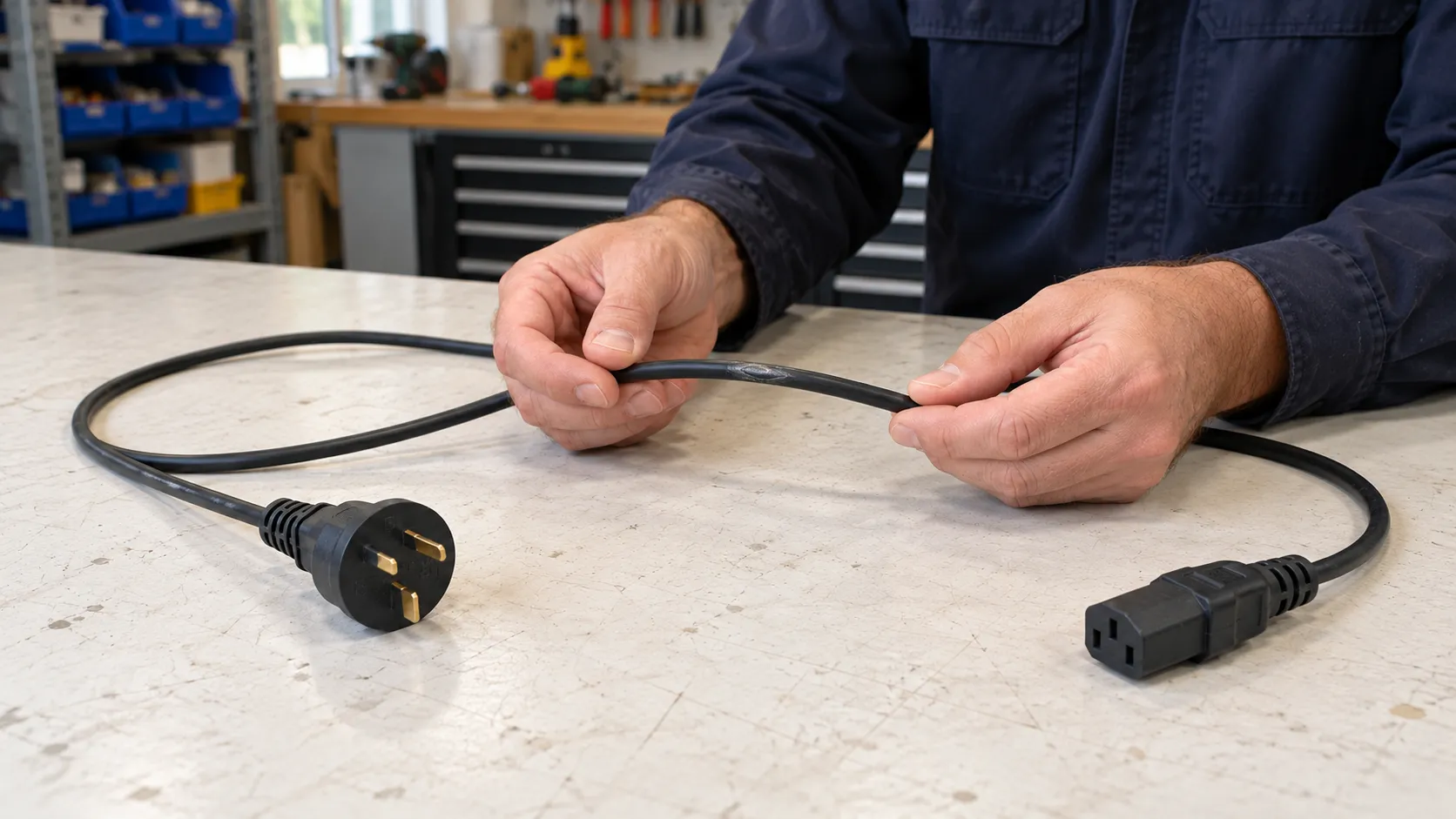
Follow these steps when a lead's status cannot be confirmed:
If a connected lead appears damaged or unsafe, follow the workplace's safe isolation procedure. Do not handle exposed electrical components, tape over damaged insulation as a repair or attempt to modify the lead. Refer the electrical repair work to a licensed electrical professional where required.
The risks of using equipment without appropriate testing provide further context for workplace electrical safety. The priority is to resolve uncertainty rather than treat an unknown testing history as evidence that the lead is safe.
When contacting a testing provider, explain whether the item is an unidentified spare, a replacement lead with unclear history or a lead that may have been used with several devices. Provide the intended equipment details so the provider can consider the lead's condition and any outstanding compatibility questions.
Ask whether the appliance and lead need to be available together, which checks are required and how the assessed items will be identified in the resulting records. Clear identification can help prevent the same uncertainty from recurring when equipment is relocated or leads are replaced.
Businesses comparing providers for testing and tagging in Tasmania can contact service providers to discuss their requirements. Explaining the lead-swapping issue helps establish whether the immediate concern involves testing history, electrical condition, compatibility or a combination of these factors.
Before returning the equipment to use, confirm what was assessed and whether any issues remain unresolved. If the lead requires further testing, compatibility confirmation or electrical repair, keep it out of service until the necessary steps have been completed.
Detachable power leads can create uncertainty when workplace equipment is moved, replaced or shared between staff. A test tag on an appliance does not, by itself, establish the testing history or suitability of a different lead. ETCS can help Tasmanian businesses clarify their testing and tagging requirements. By establishing which items were assessed and resolving any outstanding concerns before equipment returns to use, businesses can improve recordkeeping and support safer day-to-day operations.


