
Why Do Workshop Leads Keep Breaking Near the Plug?
November 12, 2026
A workshop power lead that repeatedly splits near its plug must be investigated. If the same equipment keeps developing damage in the same spot, your workspace layout, storage arrangements or everyday handling may be placing repeated strain on a small section of cable. Replacing the damaged part without addressing the underlying cause can leave the problem unresolved.
For safety officers and facilities managers in Canberra workshops, recognising these patterns helps prevent avoidable equipment downtime and improve portable equipment safety. ETCS assists businesses in addressing workplace electrical safety through testing and tagging services.
This article explains why damage concentrates at cable entry points, how workplace changes can reduce wear and what to do when a lead looks unsafe. The focus is on handling and prevention, not attempting electrical repairs.
Leads often suffer damage where a flexible cable meets a relatively rigid plug or equipment housing. Movement that would spread along the cable can become concentrated at this transition, particularly when the lead is pulled tight or repeatedly bent in one direction.
Recurring workshop electrical lead damage is therefore not always a sign that a replacement cable was unsuitable. It may indicate that the equipment is being exposed to the same mechanical stress during everyday use or storage.
A lead hanging sharply down from a plug, squeezed behind a bench or folded tightly against a tool body repeatedly bends at a small radius. Eventually, this movement can damage the outer covering or the conductors inside. Internal damage may not be obvious from the outside, so an apparently intact surface does not establish that the cable is safe.
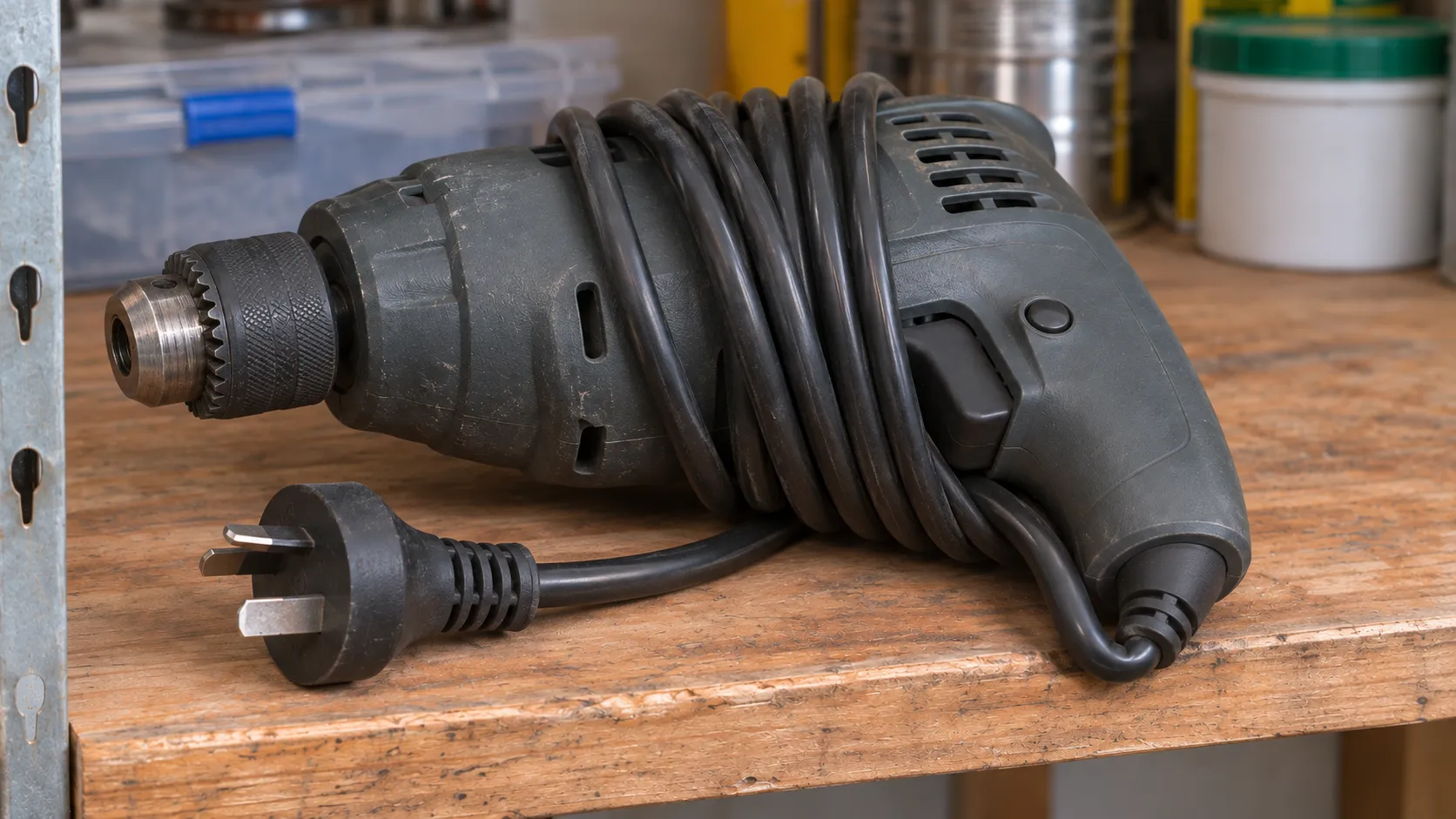
Cable strain relief manages the transition between the flexible lead and the plug or equipment enclosure. This can include a flexible entry sleeve and an internal restraint that limits movement at the connection, but it depends on the equipment design. These features help distribute mechanical stress, but they cannot compensate for constant pulling, crushing or sharp bending.
Consider a portable tool returned to the same shelf after every job. If its lead is wound tightly around the body and folded back at the entry point, storage can repeatedly stress the same section. The damage may only become noticeable during operation, even though the repeated bending occurs when the equipment is put away.
A lead stretched across a work area has little freedom to accommodate movement. Shifting a tool, moving a trolley or catching the cable on a bench corner can transfer force directly to the plug or equipment entry.
Carrying equipment by its cable creates another repeated load. So does disconnecting a plug by pulling on the lead rather than using the plug body, where it is safe to do so. These habits can become routine in a busy workshop where plugs are difficult to reach.
Mechanical wear differs from electrical overloading. Pulling, bending and crushing physically stress the cable and its entry points, while overloading concerns electrical demand and can cause overheating. Damage or discolouration alone is not enough to reliably identify the cause, and more than one issue may be present.
When recording a recurring failure, note where the equipment was positioned, how it was moved and how the lead was stored. Comparing these details across fault reports can identify whether the same workstation, equipment type or handling practice contributes to repeated damage. The distinction between visible damage and issues requiring electrical testing also explains why appearance alone cannot establish whether equipment is safe.
Reducing cable strain starts with the relationship between the equipment, its power source and the work being performed. A lead should not act as a restraint that limits normal equipment movement or carry the weight of equipment during handling.
Practical improvements often involve reviewing bench positions, trolley routes and storage spaces. The right change removes a recurring source of stress without introducing another problem, such as a trip hazard or restricted access.
Look at the equipment in its normal working position, not just where it sits before a task begins. A tool may reach the bench comfortably when idle but pull its lead tight when the operator moves to the far side of a workpiece. Mobile equipment may also need more room to move than its parked position suggests.
Where the task allows, repositioning equipment closer to a suitable existing outlet can reduce tension. Keep enough freedom in the lead for normal movement without leaving loose loops across walking routes. Cable length should not determine an unsafe working position or force the operator to reach awkwardly around machinery.
If available outlets consistently leave leads stretched across the workspace, ask a licensed electrician to assess the outlet arrangement. Relocating or adding fixed outlets is electrical work, not a task for workshop staff. Extra extension leads should not become the default permanent answer to a layout that does not suit the work.
When seeking professional assistance, explain where the strain occurs and whether the problem affects several pieces of equipment or a workstation. Experts provide a local starting point for businesses seeking testing & tagging in Canberra. Details about recurring damage can inform the discussion and identify whether further assessment is needed.
Trace the route a lead takes during an ordinary job. A cable that passes under a trolley wheel, rubs against a metal bench edge or becomes trapped beneath stored materials faces different stresses from one that simply hangs too tightly from a plug.
Suitable cable protection may help where a route cannot reasonably avoid occasional traffic or contact. It must suit the cable, expected loads and workshop conditions. Protection must not create a trip hazard, obstruct movement or conceal a damaged lead that should have been removed from use. Seek professional advice if the appropriate arrangement is unclear. Safe Work Australia provides guidance on arranging electrical leads to prevent damage, including keeping cables away from sharp edges and using suitable cable protection where applicable.
Storage deserves the same attention as active use. Provide space for loose, natural curves rather than tight bends at plugs or equipment entries. Avoid arrangements that pinch cables in drawers, under lids or between stacked items. Do not leave equipment weight hanging from its lead.
Make handling expectations specific: move equipment using its intended handle or body, keep leads clear of wheels and report snagging points. Facilities managers can also review fault reports by workstation, equipment type and storage location to identify recurring patterns. Including these observations in equipment safety records helps establish whether specific work practices or workspace arrangements need attention.
Visible cable damage calls for action, not an improvised repair or a trial run to see if the equipment still works. A tool can continue operating despite a damaged lead, so normal performance is not evidence that it is safe to use.
The immediate priority is to stop using the equipment and prevent someone else from putting it back into service. Professional assessment can then address the damaged item and the circumstances that may have caused the problem.
Warning signs include split or cut outer sheathing, exposed conductors, a cable pulling away from its entry point or an entry sleeve that has separated or deteriorated. A crushed section, damaged plug body or obvious distortion also warrants professional attention. These signs may appear near the plug, at the equipment housing or elsewhere along the lead.
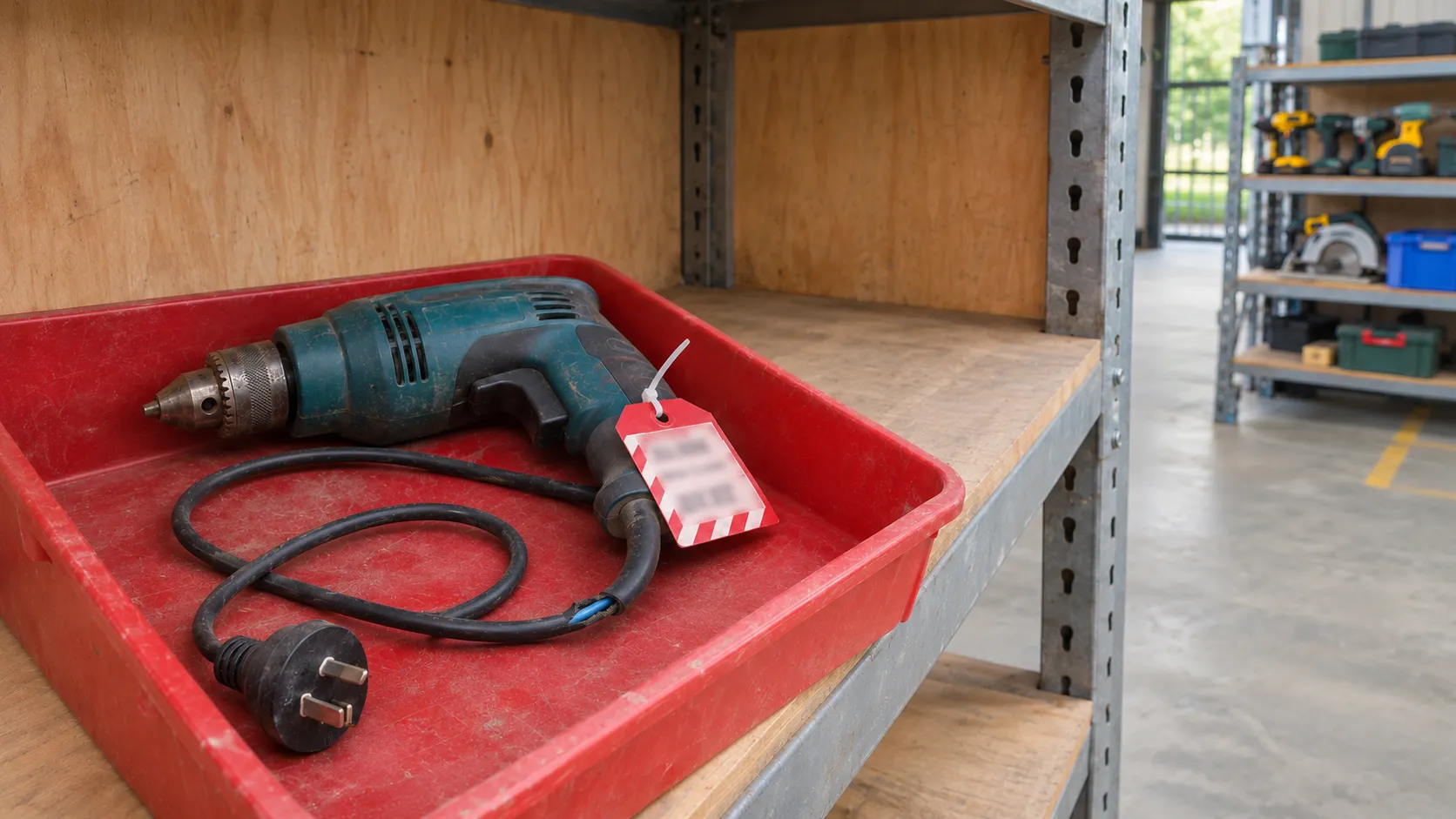
WorkSafe ACT’s guidance on identifying unsafe electrical equipment covers damaged flexible cords and the need to withdraw potentially unsafe items from service.
Do not continue using the equipment while waiting for a convenient break in production. Stop the task and follow your workplace's process for taking suspect equipment out of service. If damage makes the plug, outlet or equipment unsafe to approach or touch, keep people clear and arrange assistance from an electrician rather than attempting to disconnect it yourself.
Where safe disconnection is possible under workplace procedures, ensure the item is clearly identified and stored somewhere it cannot be casually returned to use. Simply setting it besides a bench can leave the next operator unaware of the problem. A clear fault report should identify the equipment and describe what was observed without guessing at the electrical cause.
Do not tape over damaged insulation, open a plug or flex an energised cable to reproduce an intermittent fault. These actions do not establish safety and can expose people to further risk. Record an intermittent symptom as reported rather than asking someone to demonstrate it.
Arrange a professional assessment of the damaged lead and its entry points. Any electrical repair should be carried out by a licensed expert, with suitable inspection and testing completed before the equipment returns to use. Whether repair or replacement is suitable depends on the equipment's construction, condition and the nature of the damage.
A previous test result does not cover damage sustained afterwards. A current-looking tag should never override a split sheath, exposed conductor or cable pulling out of its housing. Understanding the role of workplace inspection and testing helps keep a recorded result separate from the equipment's condition today.
Give the assessor details about how the equipment is used, moved and stored. If the lead has failed near the plug more than once, explain how frequently it happens and if other equipment in the same area has experienced similar problems.
Before returning the item to its workstation, address any identified snagging point, stretched operating position or tight storage bend. Make the handling changes clear to the people using the equipment so the same damage is less likely to happen again.
Repeated damage near a plug or equipment entry point should not be treated as an isolated maintenance issue. It can indicate that everyday handling, equipment positioning or storage arrangements are placing unnecessary strain on the same section of cable. Identifying these patterns allows businesses to address the underlying problem rather than repeatedly replacing damaged leads.
Combining sensible handling practices, suitable workspace layouts and electrical assessments can maintain portable equipment safety. ETCS can assist businesses with workplace testing and tagging requirements. Addressing damaged equipment promptly and reviewing the conditions that caused the wear helps support safer, more reliable workshop operations.


