
Why Heating Appliances Need The Right Electrical Test
October 22, 2026
A sandwich press that heats unevenly, a toaster that trips the power after several batches or a plug-in warmer with an intermittent fault can raise questions about electrical safety. For hospitality businesses, confirming that appliances are safe to use involves more than checking whether they switch on and produce heat. The assessment needs to suit the equipment and account for any problems staff have observed.
ETCS provides testing and tagging services for businesses, including hospitality operators. Knowing what a cold electrical assessment can establish, how appliance controls affect testing and when further investigation may be needed helps kitchen managers prepare for a booking and understand the results.
A cold electrical test assesses an appliance without first bringing it to its normal operating temperature. The information it provides depends on the test method, the appliance's design and the electrical characteristics being assessed.
Cold testing is not automatically inadequate and a hot test is not automatically necessary. The important consideration is whether the selected assessment is appropriate for the equipment and provides the information needed to evaluate its electrical safety.
A toaster producing toast or a sandwich press warming its plates shows that certain operating functions are working. However, normal operation does not establish that the insulation, protective earthing arrangements or other relevant safety features are in satisfactory condition.
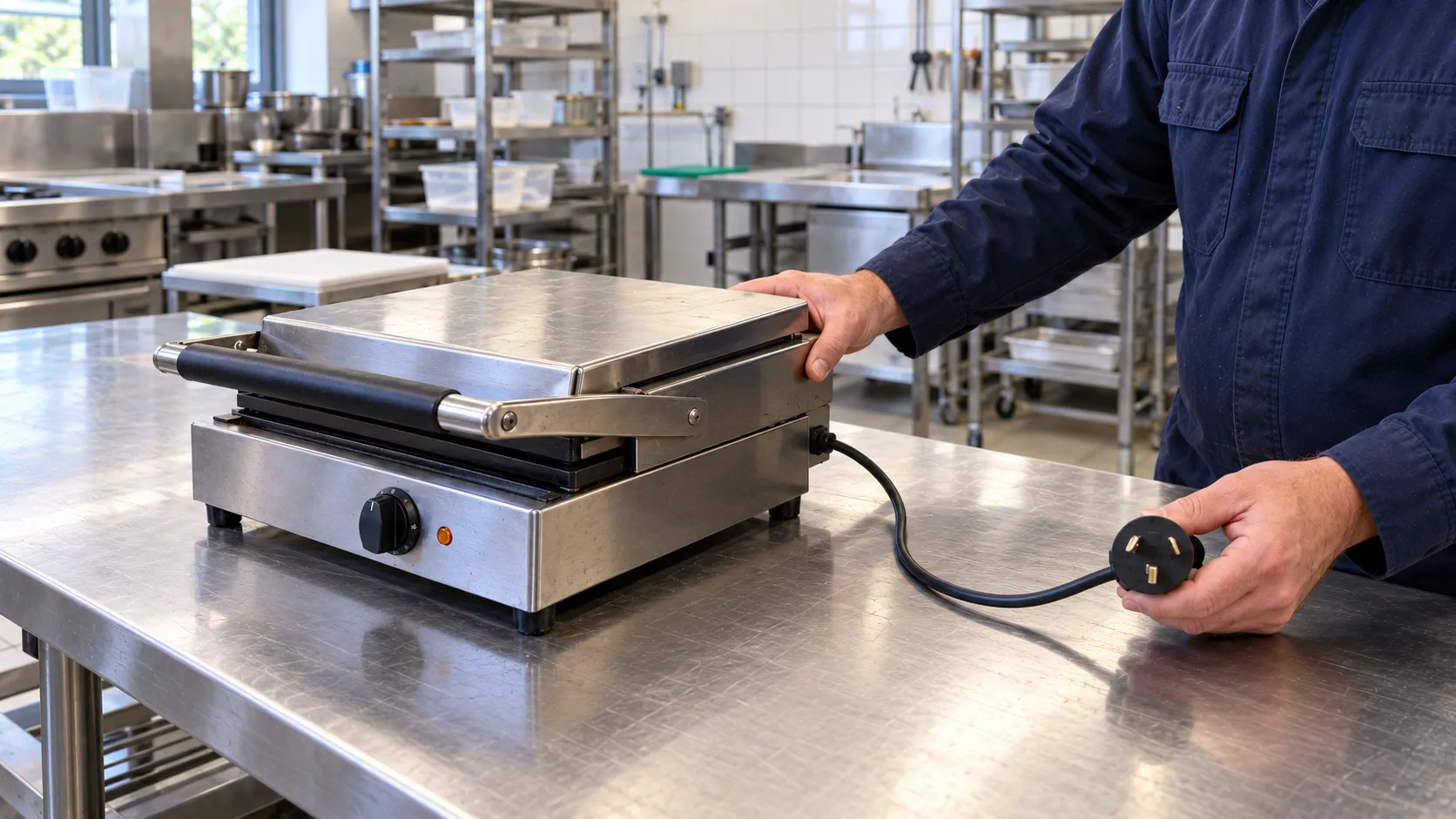
An electrical assessment may include a visual inspection, protective earth continuity testing and appropriate insulation resistance or leakage current assessments. The checks performed depend on the appliance's construction, applicable requirements and the testing method.
The term "cold test" describes an assessment performed without first heating the appliance to its normal operating temperature. It does not, by itself, specify a universal testing procedure or indicate which electrical characteristics have been checked. When comparing hospitality appliance testing services, ask what the assessment covers and whether it is suitable for the equipment involved.
For broader context, the resource on electrical testing and tagging in workplaces explains the role of workplace electrical assessments. Heating appliances may require additional consideration because of their controls, construction and operating characteristics.
Heating appliances use switches, thermostats and electronic controls to regulate their operation. A mechanical thermostat may interrupt power to a heating element when the selected temperature is reached, while electronic models may use more complex switching arrangements.
These components can affect the electrical paths available for a particular measurement. Depending on the circuit design and control state, a test may not assess every internal component through a single measurement. A competent tester needs to understand the appliance and select an appropriate method for the safety characteristics being evaluated.
A simple toaster and an electronically controlled sandwich press should not automatically receive identical testing simply because both produce heat. Their control systems, insulation arrangements and accessible conductive parts may differ.
Kitchen staff do not need to investigate internal circuits or manipulate controls to determine whether an appliance is safe. Their role is to identify the equipment, provide available manufacturer information and report any unusual behaviour. Operating an appliance successfully is not a substitute for electrical testing and a particular control position does not establish electrical safety.
The Queensland Electrical Safety Office’s guidance on safe appliance use explains the importance of following manufacturer instructions and checking for damage, moisture and signs of overheating.
Some electrical characteristics and faults can vary with temperature, moisture, operating cycles or the condition of individual components. These factors may be relevant when investigating a reported problem, but they do not mean every heating appliance needs to be tested at operating temperature.
For commercial kitchens, distinguish routine electrical testing from diagnostic investigation. Routine testing assesses specified safety characteristics under the conditions used. A separate investigation may be needed when staff report a fault that the routine assessment does not reproduce.
Heating elements operate across a range of temperatures and changes in temperature can affect their electrical resistance. Other components and insulating materials may also behave differently as an appliance heats and cools. Deterioration, moisture or damage can contribute to faults, although the underlying cause varies between appliances.
For example, staff might report that a plug-in warmer operates normally at first but trips the power after sustained heating. If a later assessment does not reproduce the problem, that does not automatically explain or resolve the original report. The operating conditions during the assessment may have differed from those present when the fault occurred.
Thermostat cycling can also change which parts of a circuit are energised. A fault that appears around a heating cycle may involve a thermostat, heating element, connection or another component. The timing of the symptom alone is not enough to identify the cause.
The reported behaviour should inform the next assessment step. A professional can determine whether further diagnostic testing under appropriate operating conditions is warranted, rather than assuming that a hot test is necessary for every appliance.
Insulation resistance testing and leakage current assessment provide different information about an appliance's electrical condition. Insulation resistance testing evaluates resistance through insulating materials using an applied test voltage. Leakage current assessment evaluates current flowing through unintended paths under the conditions of the selected method.
Neither result should be interpreted in isolation from the appliance's design and the procedure used. Electronic controls, manufacturer instructions and applicable testing requirements can affect which methods are suitable. Some equipment requires alternative or additional assessment methods to avoid misleading results or inappropriate testing.
A competent tester selects the method according to the equipment and the safety characteristics that need to be assessed. Where a reported fault appears only after heating or during an operating cycle, additional diagnostic work may be appropriate.
When arranging heating appliance testing, ask why the proposed method suits the equipment and how any limitations will be documented. This is more useful than insisting that every appliance undergo the same test or be tested while hot.
A passing result records the outcome of the assessment performed under the conditions used. It does not guarantee that an appliance will remain fault-free or establish the cause of an intermittent problem that was not reproduced.
If an appliance causes an electric shock or tingling sensation, emits smoke, shows visible electrical damage or repeatedly trips the power, remove it from service and arrange professional assessment. Do not keep operating it to see whether the fault happens again. Repairs and faults involving fixed electrical equipment should be referred to a licensed electrician where appropriate.
WorkSafe Queensland’s guidance on hospitality electrical safety explains how businesses should manage unsafe equipment, report faults and maintain inspection records.
Keep staff reports alongside the test results so the original symptoms remain part of the appliance's safety record. Useful documentation should identify the equipment, record the assessment outcome and note any failures, limitations or recommended follow-up.
The resource on improving electrical safety records provides further information about maintaining records that support workplace electrical safety.
A useful booking begins with an accurate equipment list and a clear description of any known faults. For Gold Coast hospitality operators, preparing these details helps a testing provider understand the scope of work and identify appliances that may need further investigation.
When contacting about testing and tagging in Gold Coast, explain that the booking includes plug-in heating appliances. Ask how the assessment will account for their construction and any reported problems and clarify what the service includes before confirming the appointment.
Identify each appliance clearly. Toasters, sandwich presses and plug-in food warmers may have different control systems and operating patterns. Manufacturer and model details can help the tester determine which assessment methods are appropriate.
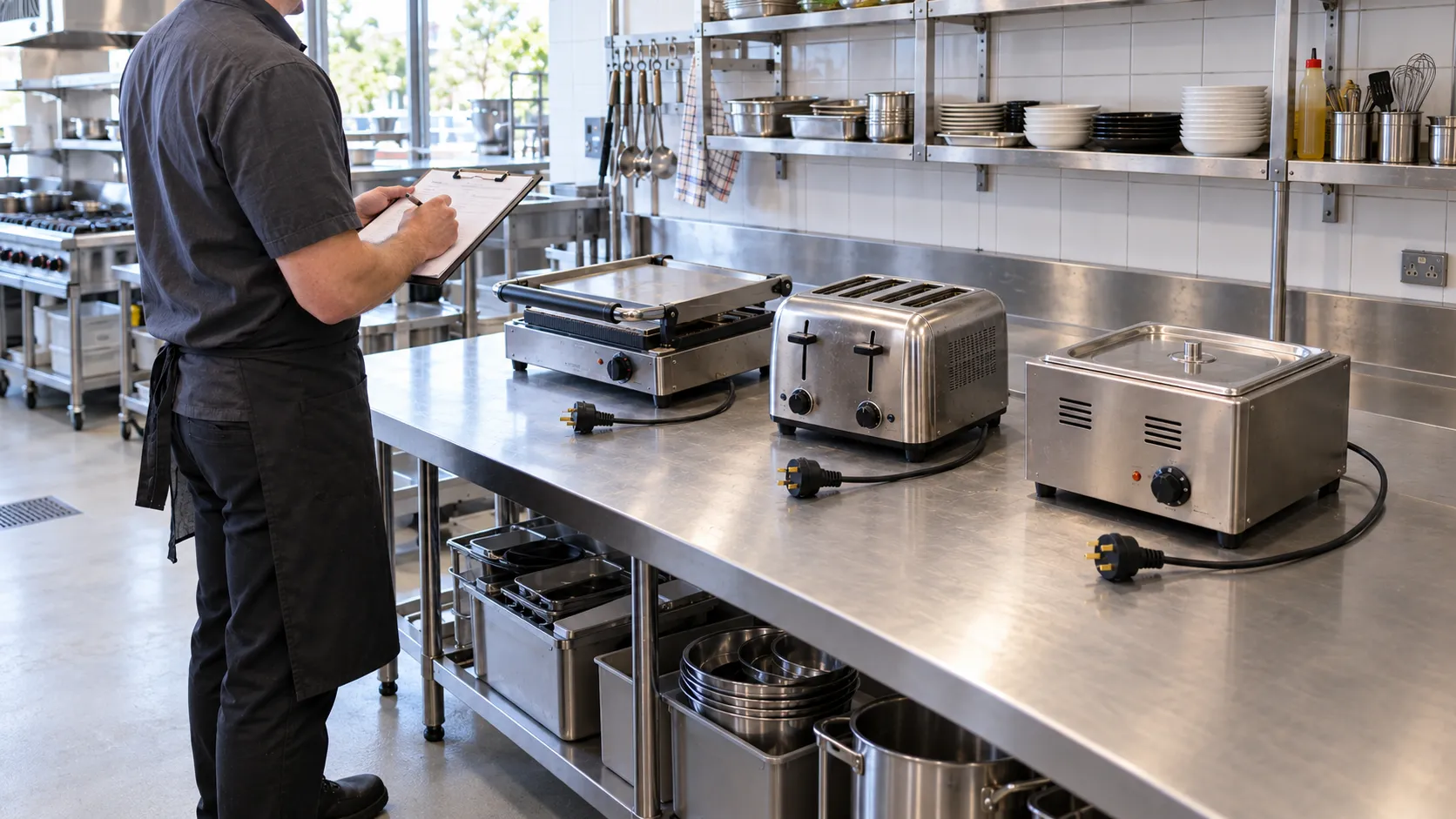
Describe symptoms in straightforward language. For example, "the toaster trips the power after several batches" provides a useful observation, whereas "the toaster needs a hot test" prescribes a method before the equipment has been assessed.
Include details about when the fault occurs, such as immediately after switching on, following sustained heating or around thermostat cycling. Mention whether multiple staff members have observed the problem and whether the appliance has already been removed from use.
Do not ask staff to recreate a fault or conduct further trial runs. The purpose of providing this information is to help the professional determine the appropriate next step, not to diagnose the appliance in advance.
Confirm which plug-in appliances are included rather than relying on a general request to test the kitchen. Smaller heating appliances can be overlooked when they are stored away or used only for specific menu items.
The resource on appliances often overlooked in testing and tagging can help kitchen managers review their equipment lists before a booking.
Also distinguish portable plug-in appliances from fixed or hardwired equipment. A portable appliance testing and tagging service should not be assumed to include fixed wiring inspections, hardwired equipment assessments or electrical repairs. Clarify the scope of the booked work and arrange a licensed electrician where fixed electrical equipment or repair work requires attention.
Before confirming a booking, ask how the provider records failed assessments, unexpected readings and limitations. The results should make it clear which appliance was assessed, what the assessment established and whether further investigation is recommended.
If an intermittent fault does not appear during routine testing, ask how that limitation will be documented and what additional investigation may be appropriate. A clear explanation should distinguish the recorded result from the unresolved symptom rather than treating a passing assessment as proof that the reported problem no longer matters.
Where suspect equipment has been removed from service, ask experts what steps are required before it can be considered for return to use. Any necessary repairs should be completed by an appropriately qualified person.
Cold electrical testing can provide useful information about the safety of commercial kitchen heating appliances, but the results need to be interpreted in the context of the equipment, the method used and any reported faults. ETCS can be contacted to discuss the appliances included in a booking and any concerns raised by kitchen staff. Preparing an accurate equipment list and describing faults helps establish the appropriate scope of work and supports better electrical safety records.


