
Test and Tag or Fixed Electrical Testing: Which Does Your Business Need?
September 21, 2026
Choosing between test-and-tag and fixed electrical testing depends on the type of equipment, how it is used and the electrical risks present in a workplace. Portable appliances and tools require different checks from fixed wiring, switchboards and hard-wired equipment, making it important for businesses to understand where each type of testing applies and when it should be carried out.
For businesses arranging testing & tagging in Canberra, ETCS provides testing services that help identify faults in portable electrical equipment before they become a safety concern. Fixed electrical testing addresses the broader installation, including circuits, protective devices and permanent equipment, providing another layer of electrical safety across the workplace.
Knowing the difference between these testing methods can help businesses establish an appropriate inspection schedule, respond to faults and maintain accurate records. The right approach may involve test and tag, fixed electrical testing or a combination of both, depending on the workplace environment, equipment and applicable safety requirements.
Regular electrical testing helps identify faults that could cause electric shocks, electrical fires, equipment damage or unexpected power interruptions. Electrical equipment and installations can deteriorate due to normal wear, physical damage, moisture, heat, dust, overloading and other workplace conditions.
Regular testing helps check that portable appliances, tools, leads and other plug-in equipment remain safe to use. Fixed electrical testing provides a separate check of permanent wiring, switchboards, circuits, earthing and protective devices, helping identify faults that may not be visible during everyday use.
Together, these testing methods help businesses identify electrical hazards early and address problems before they lead to an incident. The appropriate testing approach depends on the type of equipment, workplace environment and level of electrical risk.
Australian businesses must also understand their work health and safety duties for electrical safety, including the need to eliminate electrical risks where reasonably practicable or otherwise minimise them.
Test and tag applies to electrical equipment connected to a power supply through a flexible cord and plug. It is used to identify portable appliances, tools, leads and other plug-in equipment that may become damaged or electrically unsafe through regular use.
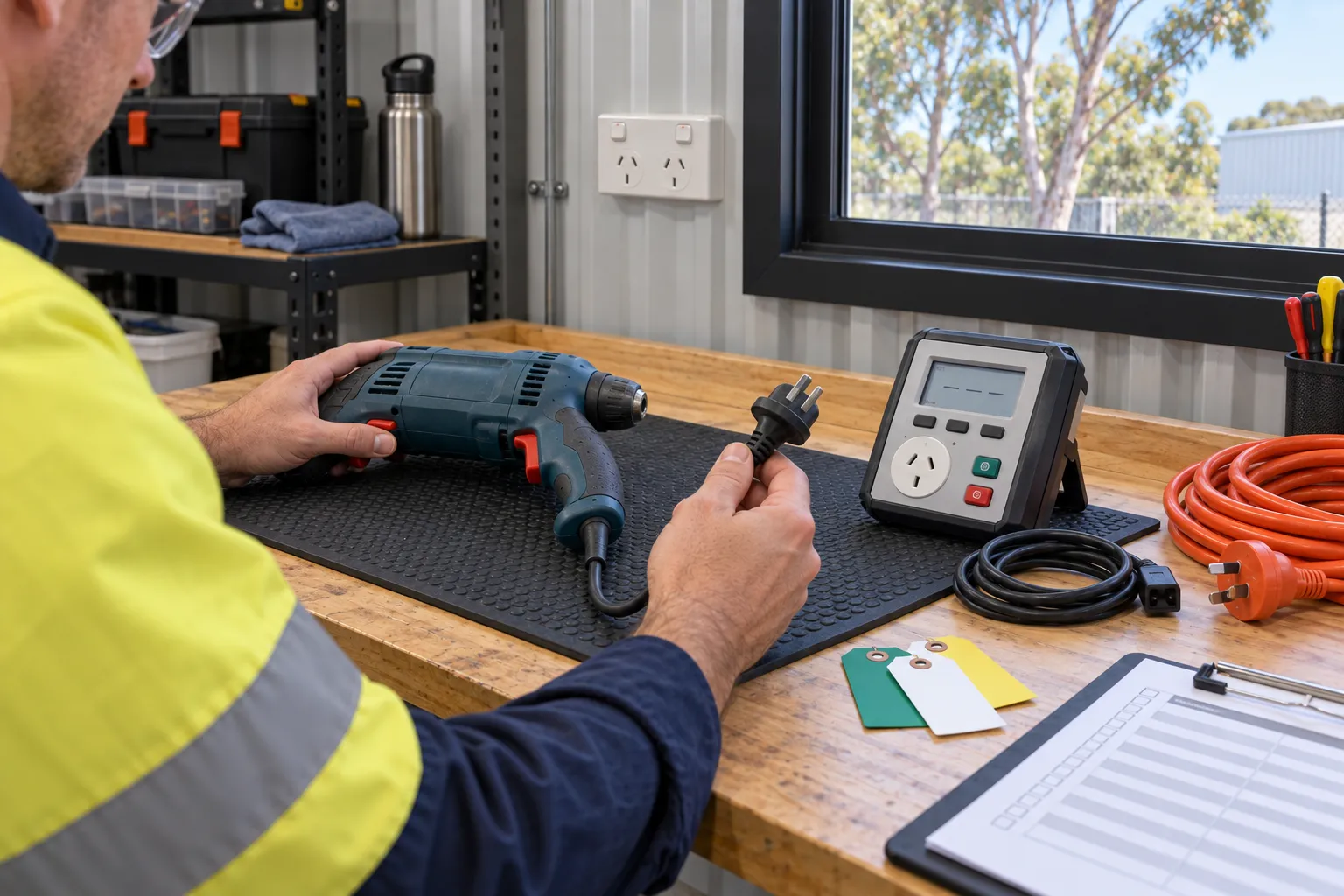
The process combines a visual inspection with electrical testing using appropriate test equipment. Equipment that passes can be returned to service with the relevant test tag, while equipment that fails should be removed from use until it has been repaired or replaced and retested.
Understanding the difference between a visual inspection and full test and tag can help businesses determine which checks are appropriate for their equipment and workplace risks.
Common equipment included in a test and tag programme can include:
Testing can include checks of the plug, cord, casing and connections, followed by relevant electrical tests such as insulation resistance and earth continuity. Class II double-insulated equipment is tested according to its construction, while portable RCDs can be tested to verify that they operate correctly.
Hard-wired equipment does not fall within the usual scope of test and tag. Fixed air conditioning, permanently connected machinery and hard-wired appliances are instead assessed as part of the fixed electrical installation.
Electrical equipment generally falls within a test and tag programme when it is portable and connected to the power supply through a flexible cord and plug. The need for regular testing depends on the workplace environment, how the equipment is used and whether its normal use exposes it to conditions that could cause damage.
Mandatory inspection and testing requirements apply to plug-in electrical equipment used in hostile operating environments where conditions like moisture, heat, vibration, mechanical damage, corrosive chemicals or dust may increase the likelihood of damage or reduce the equipment's expected life.
The WorkSafe ACT electrical equipment guidance outlines inspection and testing requirements for equipment exposed to moisture, heat, vibration, mechanical damage, corrosive chemicals or dust.
Equipment used in construction, workshops, warehouses, commercial kitchens and other demanding environments may require attention. Lower-risk workplaces can still benefit from regular visual inspections and appropriate preventative maintenance, with testing intervals determined by the equipment, operating conditions and applicable requirements.
Workplaces involving harsh conditions, frequent equipment movement or heavy use should also consider when more frequent electrical testing may be needed, rather than relying only on standard testing intervals.
Fixed electrical testing focuses on the permanent electrical installation rather than portable appliances. It assesses the systems that distribute and control electricity throughout a workplace, helping identify faults that could affect electrical safety or the reliable operation of equipment.
Depending on the installation and testing requirements, fixed electrical testing can cover:
Testing can involve visual inspections, electrical measurements and functional checks, with identified defects documented for further action. The exact scope depends on the type, condition and use of the electrical installation and the requirements that apply to the workplace.
Fixed electrical testing applies to permanent electrical installations and equipment connected directly to them. This can include systems found in offices, warehouses, workshops, retail premises, hospitality venues and industrial sites. The scope of testing depends on the installation, how it is used and the electrical risks present.
Switchboards, distribution boards and fixed circuits can be inspected and tested to identify issues such as damaged components, loose connections, overheating, incorrect circuit protection or deterioration. This can include circuits supplying lighting, power outlets and fixed equipment.
Fixed wiring, socket outlets and permanently connected equipment can form part of the assessment. Hard-wired air conditioning, commercial kitchen equipment, machinery and other fixed appliances may require testing to verify that their electrical supply and connections remain safe.
Earthing, bonding, circuit protection and RCDs are important parts of the electrical installation. Testing can help confirm that these protective measures continue to operate correctly and provide appropriate protection during an electrical fault. RCD testing requirements can apply to both portable and non-portable devices in workplaces where the relevant requirements apply.
Fixed electrical testing may form part of ongoing maintenance or be carried out following electrical alterations, renovations, equipment upgrades or signs of a potential fault. Recurring circuit trips, overheating, burning smells, unexplained power interruptions or visible damage can indicate that further inspection is warranted.
The appropriate testing scope should be determined by a licensed electrical professional based on the installation, workplace conditions and applicable requirements.
Test and tag and fixed electrical testing help identify electrical hazards, but they assess different parts of a workplace. Test and tag focuses on portable equipment that connects to a power supply through a flexible cord and plug, while fixed electrical testing examines the permanent electrical installation and hard-wired equipment.
The main differences can be summarised as follows:
The two approaches are complementary rather than interchangeable. A workplace may need a test and tag for portable equipment as well as fixed electrical testing to assess the broader electrical installation.
Electrical testing should be carried out at intervals based on the type of equipment, how it is used and the conditions of the workplace.
WorkSafe ACT states that electrical equipment used in a hostile operating environment should be inspected and tested at least every 12 months. More frequent testing may be appropriate in higher-risk situations, with WorkSafe ACT identifying manufacturing and workshop environments and commercial cleaning equipment as examples where testing at least every six months may be appropriate. Electrical equipment used on construction and demolition sites should be inspected and tested at least every three months.
Plug-in equipment should also be tested after repairs or servicing that could affect electrical safety, before first use when bought second-hand and where there is no record of previous testing. Regular visual inspections should also be carried out between formal tests, with damaged or suspect equipment removed from service.
Fixed electrical testing should be scheduled according to the installation, workplace conditions and applicable requirements. Additional testing may be appropriate after electrical alterations, equipment upgrades or when warning signs like recurring circuit trips, overheating, burning smells or unexplained electrical faults appear.
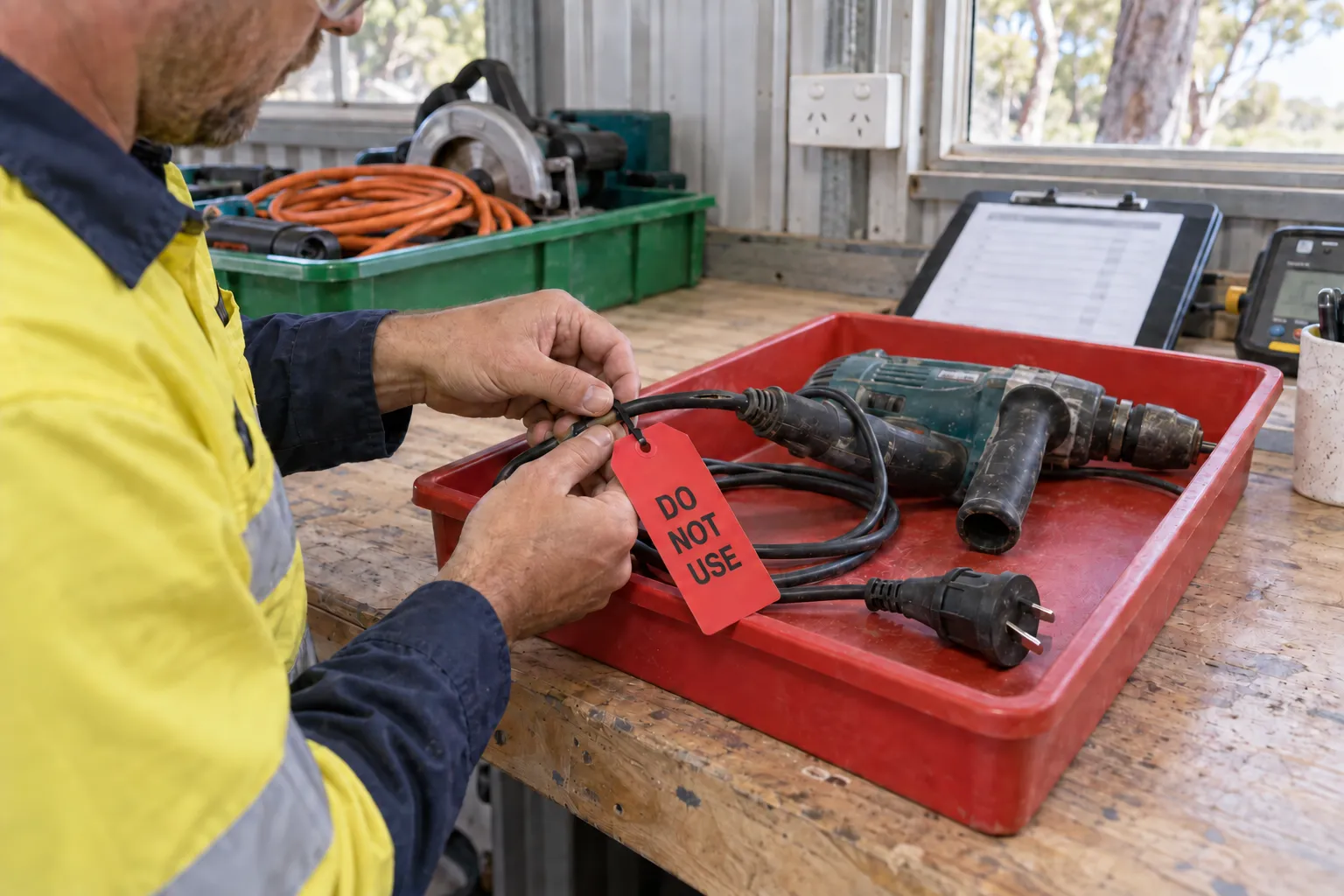
When electrical testing identifies a fault, the affected equipment or electrical system should not simply remain in use. The next steps depend on the type and severity of the fault and whether it involves portable equipment or the fixed electrical installation.
Portable equipment that fails testing should be removed from use and clearly identified so it is not accidentally returned to service. Unsafe electrical equipment must be disconnected or isolated and should not be used again until it has been repaired or tested and found safe, replaced or permanently removed from use.
Faults affecting fixed wiring, switchboards, RCDs, earthing or hard-wired equipment may require investigation and remedial work by an appropriately licensed electrician. More serious defects may require the affected circuit or equipment to be isolated until the issue is resolved.
After repairs, the affected equipment or installation should undergo the appropriate testing to verify that the fault has been addressed. Portable equipment should pass the relevant checks before being returned to use, while fixed electrical repairs may require further testing of the affected circuit or system.
The identified fault, repairs or replacement and subsequent test results should be documented. WorkSafe ACT also requires records of testing for electrical equipment used in hostile environments to be kept until the equipment is next tested, permanently removed from the workplace or disposed of.
The type of electrical testing required depends on the equipment used, how it is operated and the conditions of the workplace. Portable equipment connected by a plug is assessed through test and tag, while hard-wired equipment and the permanent electrical installation are assessed through fixed electrical testing.
Businesses should consider the types and quantity of electrical equipment on site, how frequently equipment is used or moved, workplace conditions, the condition of the electrical installation and any applicable safety requirements. Higher-risk environments may require more frequent inspection and testing, while other workplaces may need different maintenance arrangements based on their specific risks.
Many workplaces require testing approaches because they address different parts of the electrical system. A suitable programme should cover portable equipment and the fixed installation, with testing schedules and records maintained according to the relevant requirements.
The right electrical testing approach depends on the equipment, workplace environment and level of risk. Test and tag helps identify faults in portable appliances, tools, leads and other plug-in equipment, while fixed electrical testing examines the wiring, switchboards, protective devices and hard-wired equipment that form part of the electrical installation.
ETCS can help businesses establish an appropriate testing and inspection schedule based on their equipment, workplace conditions and applicable requirements. Regular inspection, prompt attention to identified faults and accurate records can help businesses maintain safer electrical equipment and installations while supporting ongoing electrical maintenance.

.svg)
.svg)


