
What Electrical Equipment Does Not Need to Be Tested and Tagged?
September 18, 2026
Knowing which electrical equipment needs to be tested and tagged is important, but understanding which equipment may not require the same testing is just as valuable. Not every electrical item in a workplace is subject to the same requirements and applying the same testing approach to every item can create unnecessary work while genuine electrical risks are overlooked.
For businesses arranging testing & tagging in Gold Coast, ETCS helps clarify which equipment falls within a test and tag programme and which items may be managed through other electrical safety measures. Requirements can depend on the equipment, how it is connected, how it is used and the type of work being performed.
This overview covers common situations where equipment may be treated differently, including fixed equipment, extra-low voltage equipment and double-insulated appliances. It also explains the importance of visual inspections, testing intervals, record-keeping and other controls that help businesses manage electrical equipment safely.
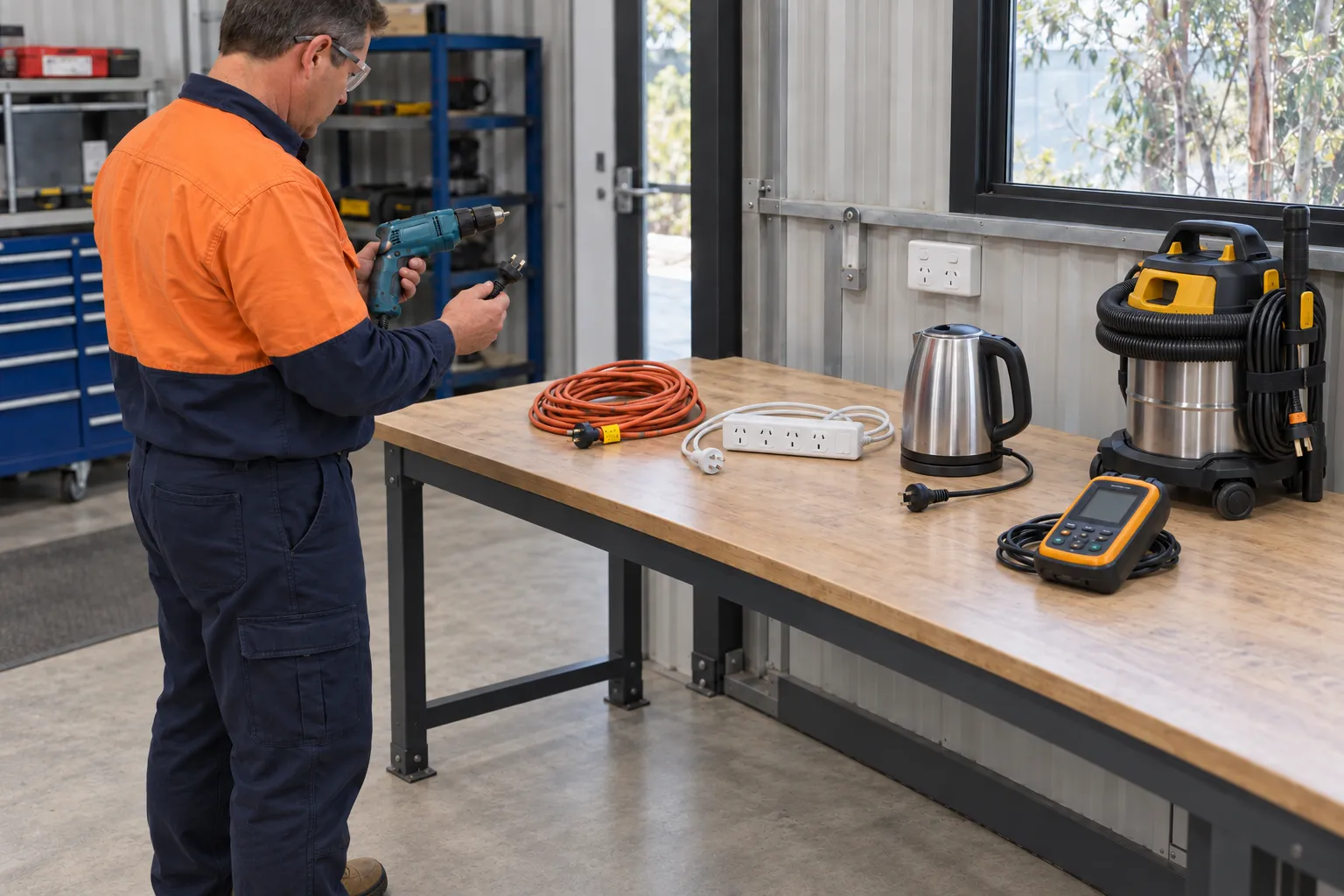
Certain portable and transportable electrical equipment must be inspected, tested and tagged when it falls within the applicable workplace requirements. This can include specified electrical equipment such as electrical equipment connected by a flexible cord and plug, cord extension sets and portable outlet devices. The requirements can also depend on the type of work and the electrical risks present.
Common workplace equipment that may fall within testing and tagging requirements are:
The conditions in which equipment is used can also affect the required controls. Moisture, dust, heat, chemicals, vibration, impact and repeated movement can increase the likelihood of damage or deterioration. Equipment should therefore be assessed according to the workplace requirements and the risks associated with its use.
Workplaces involving harsh conditions, frequent equipment movement or heavy use should also consider when more frequent electrical testing may be needed, rather than relying only on the maximum permitted interval.
Safety switches and RCDs have separate inspection and testing requirements, which vary according to the type of work and the type of device. Businesses should follow the intervals that apply to their workplace rather than relying on a single testing schedule for all electrical equipment.
ETCS’s guide to RCD testing intervals in Queensland explains how requirements can differ between fixed and portable devices and across different workplace environments.
Not every electrical item used in a workplace is subject to the same test and tag requirements. Whether equipment needs to be included in a formal testing programme depends on factors like its connection method, use, workplace and applicable electrical safety requirements.
Equipment should not be excluded simply because it is rarely used, appears low risk or has a specific construction. The relevant workplace requirements, manufacturer instructions and conditions of use should be considered before deciding how an item is managed.
Permanently connected equipment is managed differently from portable equipment covered by test and tag requirements. Fixed installations and permanently connected equipment still need to be maintained in a safe condition and should be assessed or repaired if they show signs of damage, deterioration or malfunction.
Extra-low voltage equipment may be subject to different electrical safety requirements depending on its design, power source and use. Battery-operated equipment, for example, should not automatically be treated as exempt from all electrical safety controls. The specific equipment and circumstances should be considered before deciding whether formal testing is required.
Some equipment may be managed through other inspection, maintenance or risk-control arrangements rather than a standard test and tag programme. The appropriate approach depends on the equipment and workplace rather than a general low-risk classification.
Double-insulated or Class II equipment does not rely on an earth connection for protection and may require different electrical testing methods. However, being double-insulated does not automatically mean that portable workplace equipment is exempt from testing and tagging.
Some electrical equipment is subject to specific manufacturer, industry or workplace maintenance requirements. These should be considered alongside broader electrical safety obligations. Equipment that is not subject to a test and tag requirement should still be inspected, maintained and removed from service if it becomes damaged or unsafe.
New electrical appliances do not necessarily need to be tested and tagged before their first use. However, equipment should still be visually checked for damage to the plug, cord, casing and other accessible components before being connected to the electrical supply.
Where a new appliance falls within the workplace's testing and tagging requirements, it should be included in the applicable testing programme. The required interval depends on the type of work, equipment and electrical risks involved.
Being new does not permanently remove the need for inspection or testing. Equipment can become damaged or deteriorate during use, particularly when it is frequently moved or exposed to harsh conditions.
Yes, double-insulated electrical appliances can still need to be tested and tagged when they fall within the applicable workplace requirements. Being Class II or double-insulated does not automatically exempt portable equipment from testing. Instead, its construction affects the type of electrical testing that may be appropriate.
Double-insulated equipment does not rely on an earth connection for protection and is often identified by the double-square symbol. Portable appliances can still develop damaged cords, plugs, casings or insulation through regular use, where equipment is frequently moved or exposed to harsh conditions.
Where formal testing is not required, the equipment should still be visually inspected and maintained. Any appliance showing signs of damage, overheating or electrical deterioration should be removed from service until it has been assessed and, if necessary, repaired or replaced.
Portable electrical equipment used solely in a private home is managed differently from equipment used in a workplace. Household items should still be checked for damage and used in accordance with the manufacturer's instructions.
Different requirements can apply when household equipment is taken into a workplace. A personal power tool, extension lead or other portable appliance may need to be included in the workplace's testing and tagging arrangements depending on the type of work and conditions in which it is used.
Equipment used for work from home is not automatically subject to workplace test and tag requirements simply because it is being used for work. Businesses should nevertheless ensure supplied equipment, cords, plugs and power boards remain safe and suitable for their intended use. The consideration is where and how the equipment is being used.
The business or person conducting a business or undertaking (PCBU) is responsible for managing electrical risks and ensuring required equipment is safely inspected, tested and maintained. Testing and tagging can be carried out by a competent person, but the business remains responsible for ensuring the person performing the work has the required knowledge and skills.
Testing and tagging must be performed by a person who is competent to carry out the required inspection and testing. Competency can be gained through appropriate training, qualifications, experience or a combination of these. The person must also have suitable testing equipment and be able to interpret the test results.
WorkSafe Queensland outlines the competency requirements for testing and tagging, including the knowledge and skills needed to inspect equipment, select appropriate tests and interpret the results.
Businesses need to identify equipment subject to testing requirements, arrange inspections and testing at the applicable intervals and ensure damaged or failed equipment is removed from service. They should also have procedures for reporting electrical faults and managing equipment between scheduled tests.
Workers should use electrical equipment correctly, follow workplace procedures and report damaged cords, plugs or appliances. Equipment that appears unsafe should not be used simply because it has a current test tag. Visual checks and prompt reporting help manage risks between scheduled tests.
The maximum testing interval depends on the type of work, the equipment and the applicable electrical safety requirements. The Electrical Safety Regulation 2026 commenced on 1 September 2026 and replaced the previous regulation without introducing new policy or regulatory obligations.
For specified electrical equipment, maximum intervals vary between workplaces. For example, construction work can require testing every 3 months for certain equipment and every 6 months for fixed and transportable equipment. Manufacturing work can have 6-month intervals for non-double-insulated equipment and 12-month intervals for double-insulated equipment. Office and service work can have different intervals depending on whether safety switches and other required controls are in place.
Safety switches and RCDs also have separate testing requirements. The applicable interval can depend on the type of safety switch and the work being performed, so businesses should follow the requirements relevant to their workplace rather than applying one testing frequency to every device.
Equipment may also need additional inspection or testing where it is exposed to heavy use, moisture, vibration, impact or other conditions that increase the risk of damage. Regular visual inspections remain important between scheduled tests and damaged or unsafe equipment should be removed from service.
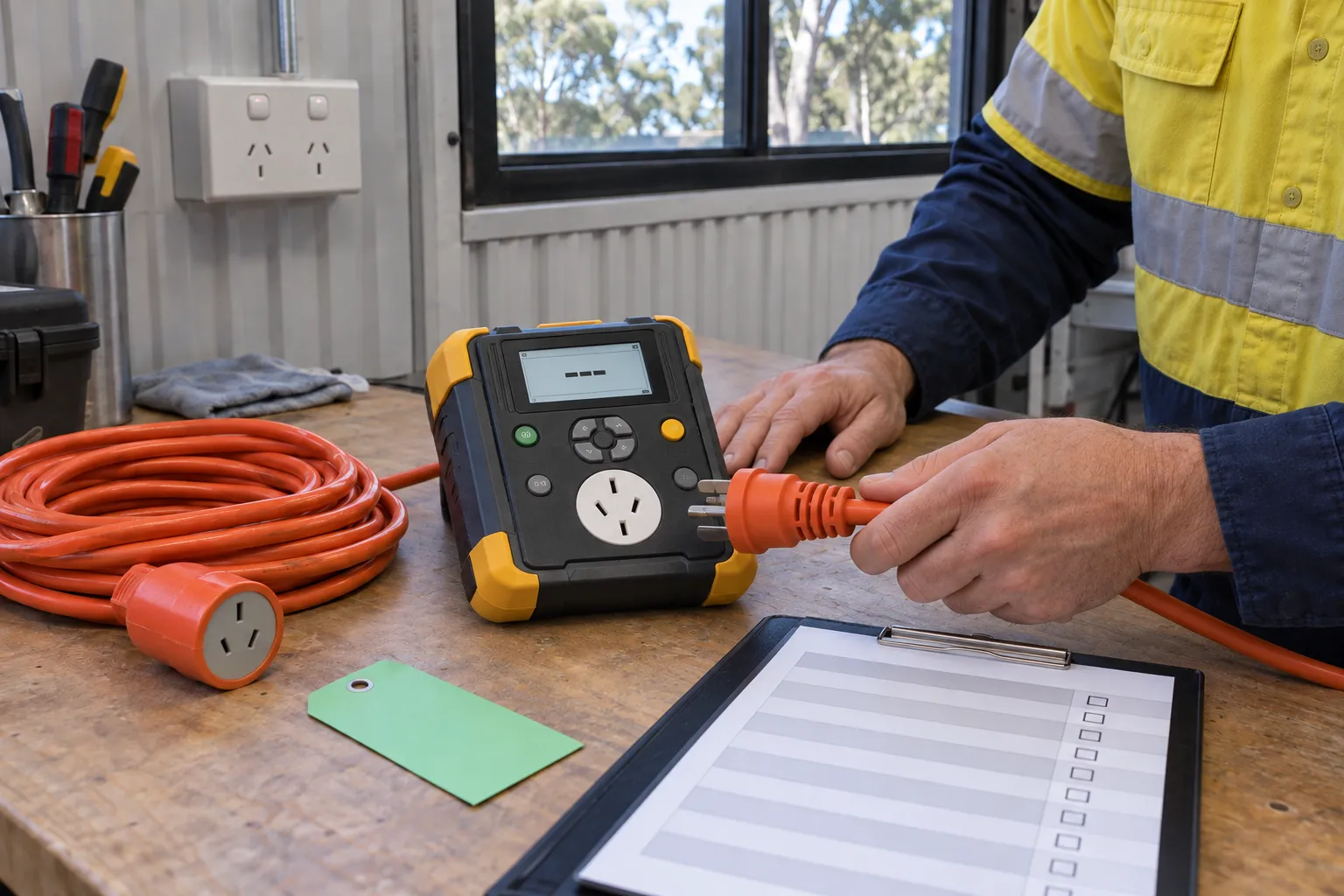
Testing and tagging involves inspecting electrical equipment, carrying out the appropriate electrical tests and recording the results. The process is carried out by a competent person using suitable test equipment to identify faults and determine whether the item is safe to remain in service.
This is the process:
The testing frequency depends on the equipment, workplace and level of risk. Visual inspections should also continue between scheduled tests because equipment can become damaged after it has been tested and tagged.
Test and tag records help businesses track electrical equipment, confirm when testing was completed and identify any faults or corrective action. A test tag alone is not a complete record, particularly when equipment is regularly moved between locations or used by different workers.
A test and tag register should provide enough information to identify each item and track its testing history. Records may include:
Businesses should keep records in a system that is easy to access and update, whether electronically or on paper. Supporting documents such as test reports, repair records and calibration information may also be retained where relevant.
The appropriate record retention period can depend on the business, equipment and applicable legal or insurance requirements. Keeping accurate records helps demonstrate that electrical equipment is being inspected, tested and maintained as part of the workplace's broader electrical safety procedures.
Failing to test and tag electrical equipment when required can allow faults to remain undetected and increase the risk of electric shock, electrical fires, equipment failure and workplace incidents. Cords, plugs, insulation and other components can deteriorate through regular use in environments involving moisture, heat, impact, vibration or frequent movement.
There can also be compliance and operational consequences for businesses. If required equipment is not included in appropriate inspection and testing, faults may remain in service for longer and records may not demonstrate that electrical risks are being properly managed.
Beware of these risks:
Testing and tagging is only one part of electrical safety. Workers should continue to carry out appropriate visual checks, report damaged equipment and remove unsafe items from service between scheduled tests. This helps ensure equipment remains safe throughout its working life rather than relying on a test tag alone.
Knowing which electrical equipment needs testing and tagging helps businesses focus on applicable electrical risks without applying unnecessary testing to every item. Equipment such as fixed installations, extra-low voltage devices and some double-insulated appliances may be managed differently, but different treatment does not remove the need for appropriate inspection, maintenance and other safety controls.
ETCS can help businesses establish a practical testing and tagging process based on the equipment, workplace and applicable requirements. A clear approach supports safer electrical equipment, accurate records and ongoing electrical safety while helping businesses meet their testing and maintenance obligations.

.svg)
.svg)


