
Electrical Testing for Gold Coast Holiday Accommodation and Short-Stay Properties
June 16, 2026
Electrical safety in holiday accommodation and short-stay properties requires more than occasional maintenance. With a constant flow of guests using appliances, power outlets and building services, property owners, managers and accommodation operators need a proactive approach to identifying and managing electrical risks. Regular inspections, safety switch testing and testing and tagging in Gold Coast accommodation settings help maintain safer environments, support compliance obligations and reduce the likelihood of disruptions that can affect guest experiences.
ETCS assists property owners, managers and accommodation providers with electrical testing and compliance requirements for holiday accommodation. This article outlines which electrical assets should be considered, how testing intervals should be managed, what records should be kept and how operators can manage compliance across single properties or larger accommodation portfolios.

Electrical testing is a critical safety control that protects guests, staff, property and business reputation. With a constant turnover of visitors who are unfamiliar with the premises, any hidden electrical fault can quickly become a serious incident.
Short-stay properties can also place extra stress on electrical systems and appliances. Portable appliances are frequently plugged in, unplugged, moved and handled by different guests. Air conditioning systems may run for long periods, and guests often use multiple personal devices at once. These conditions can increase the risk of wear, damage and overload.
Regular testing and inspection help identify problems early, so issues can be repaired before they interrupt bookings or create hazards.
The primary purpose of electrical testing in guest accommodation is life safety. Faulty wiring, damaged power points, loose connections and failing appliances can all cause electric shock or contribute to fire risk.
Depending on the property and scope of work, electrical safety checks may include both portable appliance testing and broader inspection of fixed electrical infrastructure. Portable appliance testing focuses on items such as leads, plugs, insulation resistance, earth continuity and visible damage. Fixed wiring, switchboards, RCDs and hard-wired equipment should be assessed by appropriately licensed electrical professionals.
A structured electrical safety programme may include checks of:
In multi-level buildings and dense tourist areas, an electrical fault can have serious consequences if it leads to fire, smoke damage or loss of power. Confirming that protective devices operate correctly, that earthing is effective and that equipment remains in safe condition helps reduce the risk of electrical incidents.
Accommodation operators have a duty to provide a safe environment for guests, workers and contractors. This includes taking reasonable steps to manage electrical risks and comply with relevant electrical safety legislation and standards that apply to the property and equipment.
Routine electrical testing supported by clear records helps to:
Many short-stay management agreements, insurers and booking platforms also expect properties and provided appliances to be kept in safe working condition. A documented testing programme with tags and reports provides clear evidence that electrical equipment has been inspected by a qualified person.
Unplanned electrical failures can force cancellations, require room changes or trigger negative online reviews. For holiday parks, serviced apartments, hotels and individual short-stay homes, the cost of one serious disruption can quickly exceed the cost of a structured testing programme.
On the Gold Coast, where comfort expectations are high, guests are less tolerant of issues such as tripped circuits, non-functioning power points, faulty appliances or intermittent hot water. Systematic electrical testing directly supports a smooth guest experience and consistent revenue across busy seasons.
Every item that guests can plug in, switch on or interact with electrically should be considered part of the safety picture. Regular testing is not only about obvious high-powered appliances. Smaller portable items, power boards and fixed installations can also deteriorate with heavy use, humidity, cleaning routines and frequent guest turnover.
A systematic approach works best. Items are generally grouped into fixed appliances, portable appliances and base electrical infrastructure. Each category presents different risks and may require different inspection and testing intervals depending on the use environment, exposure to damage and type of equipment.
Fixed appliances are usually permanently connected and often draw higher electrical loads, which makes their condition important for fire prevention and reliable operation.
Typical items that may need inspection include:
Checks should verify secure connections, correct operation, intact cabling and undamaged isolating switches where fitted. Corrosion on terminals, outdoor isolators and pool equipment enclosures is a common issue in coastal and humid environments and should be specifically looked for.
Because many fixed appliances and hard-wired items form part of the property’s electrical installation, they should be assessed by an appropriately licensed electrician rather than treated as standard portable appliance test and tag items.
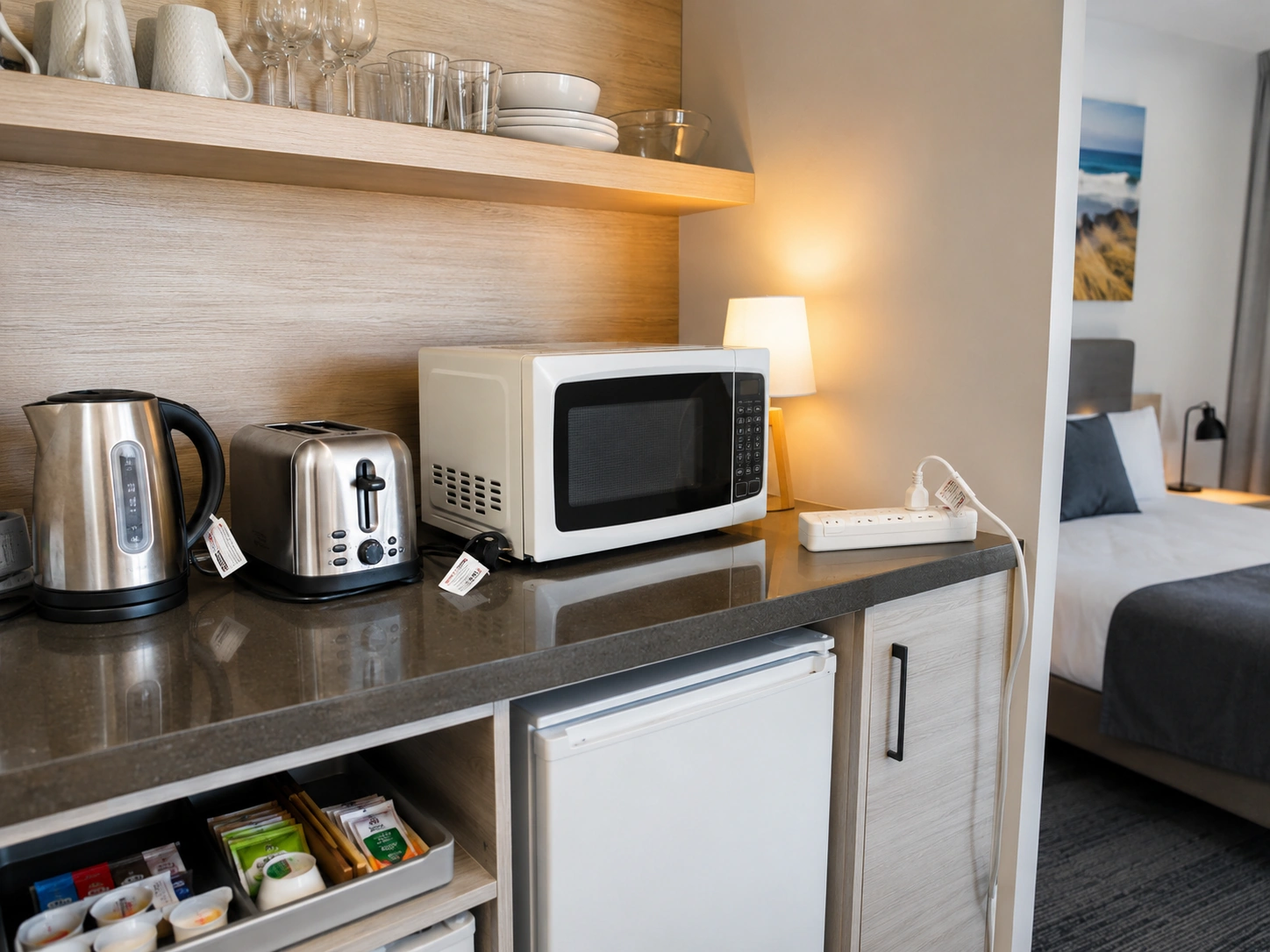
Portable appliances are frequently moved, unplugged, dropped or stored poorly, which increases the risk of insulation damage, damaged plugs and exposed live parts. In holiday accommodation, these items often experience heavier use than they would in a typical private home.
Items that should be considered for routine testing and tagging include:
Testing should confirm that the item is electrically safe for continued use. This may include earth continuity, insulation resistance, polarity checks where relevant and visual inspection for damage. Visual inspection is especially important for frayed cords, cracked plugs, heat damage and signs of liquid spills in kitchens, laundries and bathrooms.
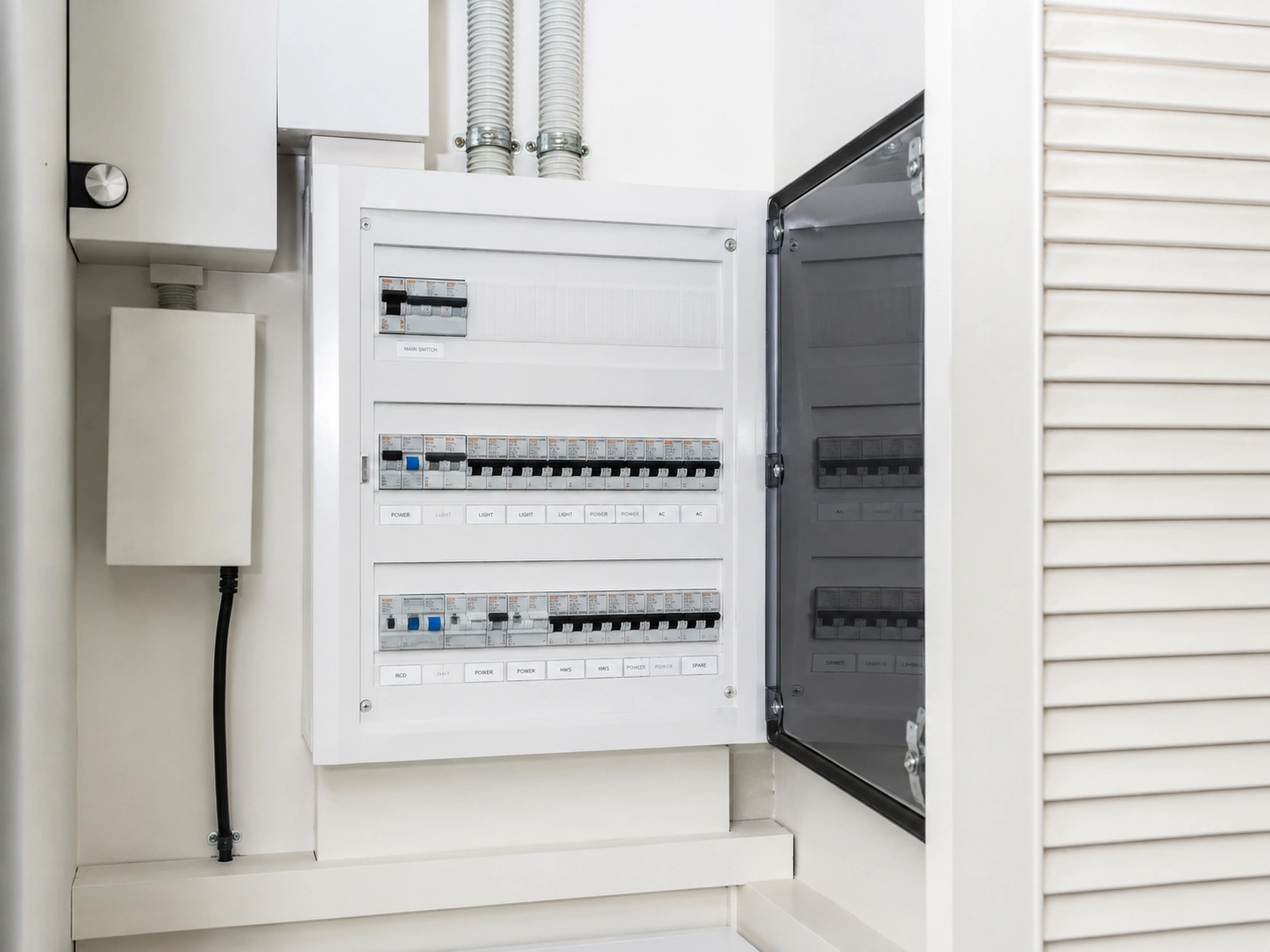
The underlying electrical infrastructure is central to overall safety in any short-stay property and must not be overlooked in favour of only checking appliances.
Important areas include:
Safety switches should be checked regularly to confirm they operate when tested. In addition to user-operated test button checks, professional RCD testing may be required to confirm trip times and performance under fault conditions.
Regular functional testing of safety switches, combined with periodic professional inspection of the switchboard and associated cabling, helps identify developing faults before they result in shock, fire or power loss during guest-occupied periods.
Holiday accommodation and short-stay properties operate in a high-turnover, high-wear environment. Electrical equipment is plugged in, unplugged, moved and used by many different guests with varying levels of care. As a result, test and tag intervals generally need to be considered carefully rather than based on a typical domestic setting.
Electrical testing frequencies should be determined according to the equipment type, operating environment, risk of damage and relevant Queensland electrical safety requirements. Higher-use accommodation settings may require more frequent checks than low-risk office environments, especially where appliances are moved, handled by guests or exposed to moisture, heat or outdoor conditions.
AS/NZS 3760 provides guidance for in-service safety inspection and testing of electrical equipment. However, the final schedule should reflect the actual use and risk profile of the accommodation property.
Published intervals provide a baseline, but the actual testing schedule should reflect the property’s risk profile, equipment use, environment and any signs of damage or repeated faults.
More frequent testing may be appropriate where:
Any appliance that fails a visual check, trips a circuit, gives off a burning smell or shows signs of overheating should be removed from service immediately and tested, repaired or replaced regardless of the scheduled interval.
Accurate records are essential to prove compliance and maintain consistent testing intervals. Test tags should clearly show the date of the test, the next test due date and the technician’s identifier.
A central register or digital log should track each appliance and its next due date. This helps ensure no items are missed during peak holiday seasons, staff changes or property handovers.
Good records should include:
Aligning testing dates with other routine maintenance, such as smoke alarm checks, air-conditioning servicing or deep cleans, can reduce disruption to guests and keep properties operating safely throughout the year.
Between formal electrical inspections, staff are the first line of defence against developing faults. Regular visual checks during routine housekeeping and changeover cleans can identify problems early, reduce safety risks for guests and avoid equipment damage.
These checks do not replace licensed electrical testing or professional inspection, but they improve safety in busy properties where appliances are moved and used frequently by different guests.
Staff should pay close attention to any power outlet or switch that looks different to the others in the room.
Common warning signs include:
Any outlet, switch or appliance showing these issues should be removed from use immediately and reported for urgent electrical assessment. Furniture should not be pushed hard against outlets or plugs, as this can stress fittings and damage cables.
Smell and sound often provide the earliest warning of an electrical problem. A persistent burning smell near an appliance or outlet should trigger immediate removal of the appliance from use and prompt isolation of the outlet if it is safe to do so.
Staff should also report repeated tripping of safety switches or circuit breakers. While one trip may be caused by a faulty appliance or temporary overload, repeated tripping usually indicates a developing fault that needs professional attention.
Guest comments are also an important early warning system. Reports of tingles from metal appliances, intermittent power to outlets, flickering lights or appliances that repeatedly cut out should never be dismissed as “just a nuisance”. Each report should be documented and referred for formal electrical assessment, even if the issue cannot be reproduced during a quick staff check.
When an appliance in a holiday unit or short-stay property fails an electrical test, it must be treated as unsafe until proven otherwise. Immediate action is critical because guests will usually assume every appliance provided is safe to use.
A failed result does not automatically mean the appliance must be thrown away. Some faults can be repaired and the item returned to service. The key is to follow a clear process that protects guests, satisfies compliance obligations and keeps records transparent for insurers, property managers and regulators.
Any appliance that fails testing and tagging or a more detailed electrical test must be removed from service straight away. It must not be left where guests can plug it in, even for a short period between bookings.
The standard approach is to clearly label the appliance as failed and unsafe for use. The plug should be made inaccessible, such as by using a lockout device or storing the item in a secure area that guests and cleaners cannot access.
Simply placing a note on the appliance is not sufficient in a busy holiday property where tags can be missed, moved or removed.
Once the appliance has been removed from service, the next step is to decide whether repair is viable or replacement is safer and more practical. This decision should be based on the test result, age, condition, usage pattern and manufacturer guidance.
Common failures in holiday accommodation may include:
Some faults can be rectified by a licensed electrician or appropriately qualified repairer. After any repair, the appliance must be retested and tagged before returning to guest areas.
Where an appliance is inexpensive, heavily used, outdated or visibly heat damaged, replacement is usually more practical than repair.
Every failed test result should be recorded in the property’s electrical register.
At minimum, the record should include:
Maintaining this documentation supports compliance with electrical safety expectations for rental and short-stay accommodation. It also provides evidence for insurers if an incident occurs and helps property managers identify repeated issues.
Before the next guest checks in, the property should be checked to confirm no failed or untested appliances have been returned to service. Clear communication with cleaning and maintenance contractors is essential so removed appliances do not quietly reappear in an attempt to keep the property fully stocked at the expense of safety.
Without a disciplined system for electrical test records, it becomes difficult to prove compliance, identify trends or schedule retesting on time. Effective record management should allow fast access to the history of any appliance or circuit across every room and property.
A clear structure for documentation, supported by consistent labelling and centralised storage, is essential. Records should link each asset to its exact location, test outcome, test date and next due date so compliance can be demonstrated during audits, guest incidents, insurer queries or property handovers.
Each electrical item should have a unique identifier that remains with it for its entire life. In multi-room or multi-property operations, this prevents confusion when appliances are moved, swapped or replaced.
A practical approach is to assign an asset code that includes the property identifier, room or area and item type.
Labels applied during testing should clearly show:
In short-stay environments where items move between units, the asset ID is often more reliable than the room number alone. Records should show both the current location and any previous locations, so potential fault patterns can be identified.
Testing records only provide value if they can be produced quickly and understood easily. For short-stay operations, documentation should be kept in a secure but accessible digital format with backups.
Staff responsible for property operations should know where records are stored and how to interpret key fields such as test outcomes, retest dates and failed item actions. Site folders or digital dashboards at each reception, management office or maintenance hub can help summarise upcoming tests by room or property.
Incident reports involving guests or staff should reference the relevant testing record for any appliance, circuit or area involved. This should include the last test date, result and any previous defects. Linking operational incidents to test documentation strengthens compliance records and helps identify whether certain items or areas require more frequent inspection.
Managing electrical safety in holiday accommodation requires a consistent and well-documented approach that extends beyond occasional inspections. From portable appliances to switchboards, every electrical component plays a role in protecting guests, maintaining compliance and supporting reliable operations.
Regular testing, prompt fault rectification, safety switch checks and accurate record management help reduce the risk of electrical incidents while minimising disruption to bookings and property performance. By working with qualified specialists, property owners and managers can ensure their electrical systems and equipment remain compliant, well-maintained and ready for guest use.

.svg)
.svg)


